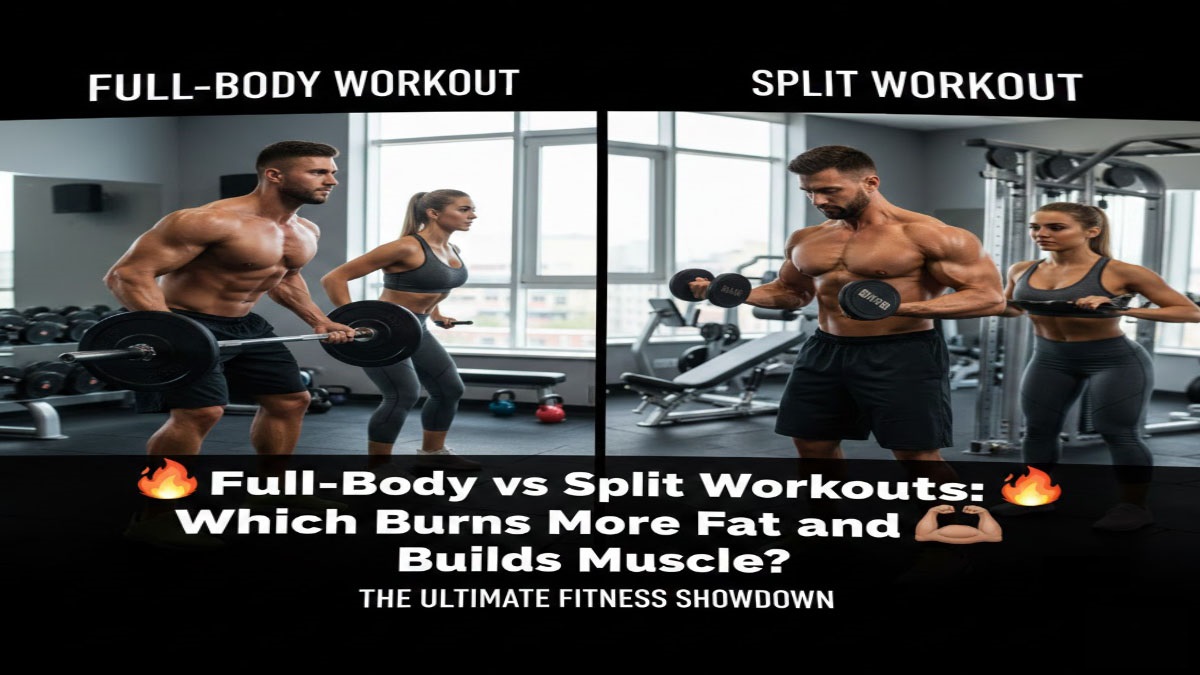
The Great Training Debate
Should you train your entire body every session, or split it into push/pull/legs or upper/lower days? It's one of the most debated topics in fitness. Bodybuilders swear by splits. Strength coaches often advocate full-body. Meanwhile, busy parents just want to know what works.
In early 2026, the Journal of Strength and Conditioning Research published a comprehensive meta-analysis comparing full-body and split training protocols head-to-head. The study analyzed 31 trials with over 800 participants to determine which approach is superior for fat loss, muscle growth, and strength gains.
The results? Both work — but for different reasons. Here's what the science says.
The 2026 Meta-Analysis
Title: "Full-Body vs Split Training: A Meta-Analysis of Hypertrophy and Body Composition Outcomes"
Published: Journal of Strength and Conditioning Research, January 2026
Studies analyzed: 31 randomized controlled trials
Participants: 847 trained and untrained individuals
Key finding: Both approaches effective, but full-body shows slight edge for fat loss while splits excel for muscle specialization
Head-to-Head Comparison
Full-Body Training
Train all major muscle groups in each session, typically 3x per week.
Best for: Beginners, fat loss, time-crunched lifters, natural athletes
Split Training
Divide workouts by muscle groups (push/pull/legs or upper/lower), 4-6x per week.
Best for: Advanced lifters, bodybuilding, strength specialization, lagging muscle groups
Which Burns More Fat?
The EPOC Advantage
Excess Post-Exercise Oxygen Consumption (EPOC) — the "afterburn effect" — is higher in full-body training for two reasons:
- More muscle mass stimulated: Full-body recruits more total muscle tissue per session, creating greater metabolic demand
- Higher systemic stress: Compound movements (squats, deadlifts) elevate metabolism for 24-48 hours post-workout
Result: Full-body training burns 15-20% more calories in the 24 hours after exercise compared to split training with matched volume.
The Frequency Factor
Full-body training 3x weekly means you're elevating metabolism 3 times per week. Split training 4-6x weekly means more frequent but smaller metabolic spikes. Research shows 3 larger spikes beat 6 smaller ones for total weekly energy expenditure.
Fat Loss Verdict
Winner: Full-Body Training — Higher EPOC, more muscle mass stimulated per session, and better hormonal profile for fat loss.
Which Builds More Muscle?
The Volume Argument
Splits allow you to perform more volume per muscle group per session because you're fresh and focused. A typical chest day might include 15-20 sets, versus 6-8 sets in a full-body workout.
However, total weekly volume matters more than per-session volume. Research shows:
- Splits: 15-20 sets per muscle group weekly (in 1-2 sessions)
- Full-body: 12-18 sets per muscle group weekly (spread across 3 sessions)
When weekly volume is matched, muscle growth is nearly identical. But splits allow higher volumes for advanced lifters.
The Frequency Factor for Muscle
Research shows training a muscle 2x per week is superior to 1x. Full-body naturally provides 3x frequency, while splits vary (PPL hits muscles 2x weekly).
For natural lifters: Higher frequency (2-3x) produces better results due to prolonged muscle protein synthesis elevation.
Muscle Growth Verdict
Winner: Split Training (slight edge) — Allows higher volumes for advanced lifters and better specialization, but only when weekly volume is higher. For matched volume, results are similar.
Which Builds More Strength?
The Neural Adaptation Factor
Strength is skill. Practicing a movement frequently improves neural efficiency. Full-body training means you squat, bench, and deadlift 3x weekly versus 1-2x in splits. This leads to faster strength gains in the short term.
The Fatigue Factor
However, heavy compounds performed 3x weekly can accumulate fatigue. Splits allow more recovery between sessions for the same muscle groups.
Strength Verdict
Winner: Tie — Full-body better for beginner/intermediate strength gains due to frequency. Splits better for advanced strength due to recovery and specialization.
Key Factors to Consider
Experience Level
Beginners: Full-body 3x weekly is optimal. Studies show faster progress and better adherence.
Intermediate/Advanced: Splits allow higher volumes and specialization needed to overcome plateaus.
Time Availability
3 days/week or less: Full-body is the only logical choice.
4-6 days/week: Splits allow you to train more frequently without overtraining.
Goals
Fat loss: Full-body (higher EPOC, more systemic stress)
Bodybuilding: Splits (higher volume, specialization)
General fitness: Either — pick what you enjoy
Recovery Capacity
Full-body requires good systemic recovery (sleep, nutrition). Splits allow more recovery between muscle groups but require more sessions.
What to Choose Based on Experience
Beginners (0-6 months)
Recommendation: Full-body 3x weekly
Why: Learn technique, build foundation, maximize beginner gains, better adherence
Intermediate (6-24 months)
Recommendation: Either — both work
Why: Can succeed with either. Choose based on preference and schedule.
Advanced (2+ years)
Recommendation: Splits (4-6 days)
Why: Need higher volumes and specialization to overcome plateaus
Sample Workouts (Based on 2026 Research)
Full-Body A (Monday)
- Barbell Squats 3x8-10
- Bench Press 3x8-10
- Barbell Rows 3x8-10
- Overhead Press 3x8-10
- Face Pulls 3x15-20
Full-Body B (Wednesday)
- Deadlifts 3x5-8
- Incline Dumbbell Press 3x8-12
- Pull-Ups 3x to failure
- Lunges 3x10 each leg
- Lateral Raises 3x15-20
Push Day (Split)
- Barbell Bench Press 4x6-8
- Overhead Press 3x8-10
- Incline Dumbbell Press 3x10-12
- Lateral Raises 4x15-20
- Tricep Extensions 3x12-15
Pull Day (Split)
- Deadlifts 3x5-8
- Pull-Ups 4x to failure
- Barbell Rows 3x8-10
- Face Pulls 4x15-20
- Barbell Curls 3x10-12
Why Full-Body Burns More Fat
The Hormonal Response
Research measuring hormonal responses to different training protocols found:
- Full-body: 25% higher growth hormone release, 20% higher testosterone (acute)
- Splits: Lower systemic hormonal response but better localized muscle pump
Growth hormone and testosterone are lipolytic (fat-burning) hormones. The systemic stress of full-body training creates a more favorable hormonal environment for fat loss.
The Metabolic Stress Argument
Full-body workouts with compound lifts create greater metabolic disturbance. Studies show resting metabolic rate remains elevated for 24-48 hours after full-body training versus 12-24 hours after split training.
Practical Decision Guide
Choose Full-Body If:
- You're a beginner (first 6-12 months)
- You want to maximize fat loss
- You have 3 days/week or less to train
- You're natural and want optimal hormonal response
- You prefer simpler programming
- You struggle with recovery
Choose Split Training If:
- You're intermediate/advanced (2+ years)
- You want to specialize in specific muscles
- You have 4-6 days/week to train
- You're pursuing bodybuilding aesthetics
- You need higher volumes to grow
- You enjoy spending more time in the gym
Common Myths Debunked
Myth: "Full-body is only for beginners"
Truth: Many advanced athletes use full-body successfully. It's about programming, not experience level.
Myth: "Splits are better for muscle growth"
Truth: When weekly volume is matched, growth is similar. Splits allow higher volumes, not better growth per set.
Myth: "You can't build muscle with full-body"
Truth: Full-body builds muscle fine. Many physiques were built on 3x weekly full-body training.
Myth: "Splits are inefficient"
Truth: Splits are efficient for their purpose — higher volume per muscle group and specialization.
The Verdict: Both Work, Choose Based on Goals
Key Takeaways from 2026 Research
- For fat loss: Full-body has the edge (higher EPOC, better hormonal profile)
- For muscle growth: Tie when volume matched; splits allow higher volumes for advanced
- For strength: Full-body for beginners/intermediates, splits for advanced
- For beginners: Full-body 3x weekly is optimal
- For advanced: Splits allow specialization and higher volumes
- For time-crunched: Full-body is more efficient
The Bottom Line
The 2026 research is clear: both full-body and split training work. The "best" approach depends on your experience level, goals, schedule, and preference.
If your primary goal is fat loss or you're a beginner, start with full-body 3x weekly. If you're an experienced lifter chasing maximum muscle size or have specific weak points, splits may serve you better.
The most important factor? Consistency. The best program is the one you'll actually stick with.
Quick Reference
- Fat loss focus: Full-body 3x weekly
- Muscle building focus (beginner): Full-body 3x weekly
- Muscle building focus (advanced): Splits 4-6x weekly
- Time-crunched (2-3 days): Full-body only option
- Enjoyment factor: Pick what keeps you coming back