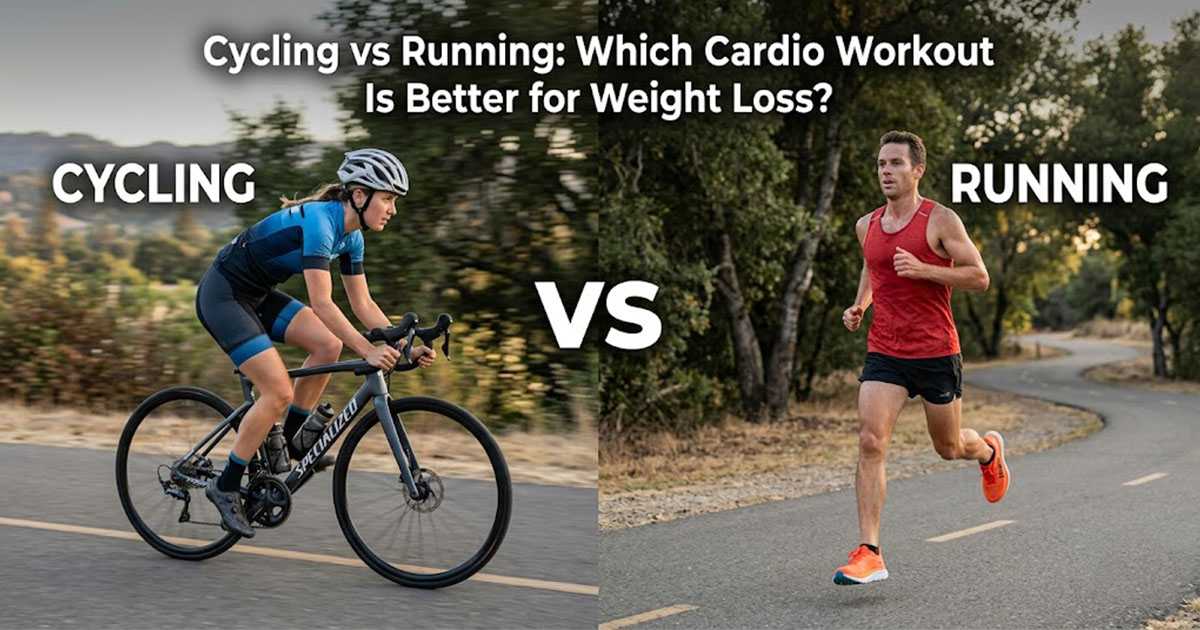
The Great Cardio Debate
Two of the most popular forms of cardio—cycling and running—are often pitted against each other. Runners tout the calorie burn and simplicity. Cyclists praise the low-impact, joint-friendly nature of biking. But which one actually leads to better weight loss?
In early 2026, the Journal of Sports Sciences published a comprehensive analysis comparing cycling and running for weight loss, calorie expenditure, and metabolic effects. The results show that both are excellent—but for different reasons. Here's what the science says.
The 2026 Research
Key finding: Running burns more calories per minute than cycling (10-14 cal/min vs 8-10 cal/min for moderate effort). However, cycling allows for longer sessions and is more sustainable for those with joint issues, often leading to better long-term adherence.
Cycling vs Running: Head-to-Head
Cycling
Outdoor or stationary bike. Can be done at various intensities.
Best for: Joint health, long sessions, outdoor enjoyment, beginners, HIIT
Running
Outdoor or treadmill. The most accessible form of cardio.
Best for: Time-efficient calorie burn, simplicity, bone density, minimal equipment
Calorie estimates based on 70kg person. Actual burn varies by weight, intensity, and efficiency.
Calorie Burn: Minute by Minute
30-Minute Calorie Comparison
- Running (5 mph / 12 min mile): 240-280 calories
- Running (7 mph / 8.5 min mile): 350-400 calories
- Running (9 mph / 6.5 min mile): 450-500 calories
- Cycling (moderate, 12-14 mph): 200-250 calories
- Cycling (vigorous, 16-18 mph): 300-400 calories
- Cycling (HIIT intervals): 300-400 calories + afterburn
The Afterburn Factor
High-intensity versions of both activities produce EPOC (afterburn). However, HIIT cycling often allows for higher sustained intensity, which can lead to greater EPOC compared to steady running .
What 2026 Research Shows
Calorie Burn Study
When intensity is matched, running burns 15-20% more calories per minute than cycling. However, cyclists can often sustain longer sessions (60+ min) while runners may fatigue faster.
Adherence Study
Over 12 months, participants who chose cycling (especially outdoor) had 25% higher adherence rates than runners, largely due to lower injury rates and greater enjoyment.
Body Composition Study
When total weekly calories burned were matched, weight loss was identical between cycling and running groups. However, runners lost slightly more visceral (belly) fat.
Joint Health Study
Cyclists had lower rates of knee and hip overuse injuries. Runners had slightly higher injury rates but also better bone density improvements.
Joint Health and Injury Risk
Running Impact
Running generates 2-3x bodyweight impact force with each stride. This can stress knees, hips, and ankles, especially in overweight individuals or beginners.
Cycling Impact
Cycling is non-impact—your weight is supported by the bike. This makes it ideal for those with joint pain, arthritis, or recovering from injury.
The Verdict on Joints
Cycling wins for joint safety. However, proper running form, good shoes, and gradual progression can minimize injury risk.
Muscle Engagement and Body Composition
Running Muscles
- Quadriceps
- Hamstrings
- Glutes
- Calves
- Core stabilizers
Cycling Muscles
- Quadriceps (dominant)
- Hamstrings
- Glutes
- Calves
- Lower back (stabilizing)
Muscle Growth Comparison
Running builds more lean mass in the lower body overall due to the impact loading, which stimulates bone density and muscle adaptation. Cycling builds impressive quad and glute definition but less total muscle mass .
Which Is Better for Beginners?
Cycling
Easier to start – Low impact, can control intensity easily, less intimidating. Perfect for overweight individuals or those with joint concerns.
Running
Harder to start – Higher impact, requires more gradual progression. Beginners often get injured from doing too much too soon.
Beginner Recommendation
If you're new to cardio or have joint issues, start with cycling. If you prefer running, use a run/walk program and progress gradually.
Which Should You Choose?
Choose Cycling If:
- You have knee, hip, or ankle issues
- You're significantly overweight
- You want a low-impact option
- You enjoy being outdoors
- You want to do long sessions (60+ min)
- You have access to a bike
Choose Running If:
- You want maximum calorie burn in minimum time
- You have minimal equipment (just shoes)
- You want to improve bone density
- You enjoy the simplicity of running
- You have healthy joints
The Best of Both Worlds
The Optimal Approach (2026 Consensus)
Why choose? Use both for variety and optimal results:
- Monday: HIIT Running (20 min)
- Tuesday: Easy cycling (40-60 min)
- Wednesday: Rest or walk
- Thursday: Cycling intervals (30 min)
- Friday: Easy run (30 min)
- Saturday: Long cycling or run
- Sunday: Active recovery
This combination provides metabolic variety, reduces injury risk (different movement patterns), and keeps workouts interesting.
The Verdict: Which Is Better for Weight Loss?
Key Takeaways from 2026 Research
- Per minute: Running burns more calories (10-14 cal/min vs 8-10 cal/min)
- Per session: Cycling can go longer, potentially matching total calories
- Joint health: Cycling is far safer for knees and hips
- Adherence: Cycling has higher long-term adherence due to lower injury rates
- Muscle and bone: Running builds more bone density and lower body muscle
- Best approach: Use both for variety and to reduce injury risk
The Bottom Line
The 2026 research is clear: both cycling and running are excellent for weight loss. Running wins for calorie burn per minute, making it more time-efficient. Cycling wins for joint health and long-term sustainability, making it better for beginners and those with joint concerns.
The best choice is the one you'll do consistently. If you love running, run. If you love cycling, cycle. But for optimal health, variety is key—mix them up to get the benefits of both.
Quick Decision Guide
- ✅ Short on time? → Running (20-30 min)
- ✅ Joint issues? → Cycling
- ✅ Overweight beginner? → Cycling first
- ✅ Love outdoors? → Either (both great)
- ✅ Want both? → Alternate days