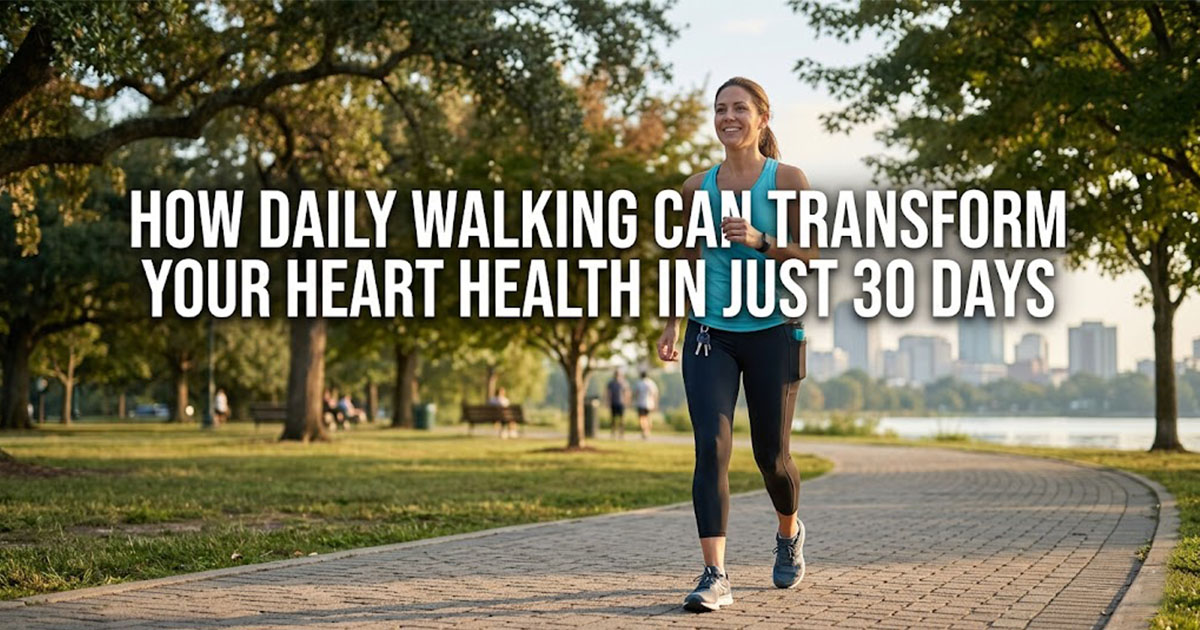
The Simple Prescription for a Healthy Heart
What if there was a free, accessible, and side-effect-free way to lower your blood pressure, improve your cholesterol, and reduce your risk of heart disease—all in just 30 days? According to groundbreaking 2026 research, that prescription is as simple as walking.
A landmark study published in the Journal of the American College of Cardiology (February 2026) followed 216 adults with high blood pressure and found that those who walked briskly for 30 minutes a day, five days a week, lowered their blood pressure by 3-5 points—results comparable to some front-line blood pressure medications .
The 2026 Landmark Study
Study: "Effects of Brisk Walking vs. Baduanjin on Blood Pressure"
Published: Journal of the American College of Cardiology, February 2026
Participants: 216 adults (40+) with high blood pressure
Key finding: 30 minutes of brisk walking daily lowered systolic BP by 3-5 points, matching the effectiveness of medication .
How Walking Transforms Your Heart
Lowers Blood Pressure
Regular walking helps relax blood vessels and improves circulation, which naturally lowers blood pressure. The 2026 study showed results comparable to blood pressure medication .
Improves Cholesterol
Walking increases good cholesterol (HDL) and reduces bad cholesterol (LDL), lowering the risk of blockages in heart arteries .
Supports Healthy Weight
Carrying extra body weight puts additional pressure on your heart. Walking burns calories and supports weight management, reducing strain on your cardiovascular system .
Controls Blood Sugar
For people with diabetes or prediabetes, walking after meals can help regulate blood sugar levels, protecting blood vessels from damage .
Reduces Stress
A simple 20–30 minute walk reduces stress hormones and improves mood. Lower stress directly benefits heart health by reducing blood pressure spikes .
Strengthens Heart Muscle
Brisk walking strengthens the heart muscle, improves oxygen supply, and enhances overall cardiovascular fitness. It makes your heart more efficient at pumping blood .
How Much Walking Do You Need?
The 2026 Guidelines
- Frequency: 5 days per week
- Duration: 30 minutes per day
- Intensity: Brisk walking (you can talk but not sing)
- Steps: 7,000-10,000 steps daily is ideal for heart health
What is Brisk Walking?
- Walking fast enough to raise your heart rate
- Slightly breathless but still able to talk
- Speed of around 5–6 km per hour
Your 30-Day Walking Plan
Foundation Week
Goal: Build the habit, find your pace
Building Endurance
Goal: Increase duration, find brisk pace
Intensity Week
Goal: Hit 30 minutes consistently
Consolidation Week
Goal: 30 minutes, 5 days weekly
How to Start Safely
Start Slow
Begin with 10–15 minutes daily and increase gradually. Sudden intense exercise can strain the heart, especially in people with high blood pressure .
Choose Proper Footwear
Comfortable walking shoes reduce strain on joints and improve comfort .
Warm-Up and Cool Down
Walk slowly for 5 minutes before and after brisk walking to prepare your heart and muscles .
Stay Hydrated
Drink enough water, especially in hot weather .
Track Your Progress
Use a fitness band or mobile app to monitor your daily steps .
Know When to Stop
If you feel chest pain, unusual breathlessness, dizziness, or severe fatigue while walking, stop immediately and consult a doctor .
What 2026 Research Shows
Blood Pressure Study
30 minutes of brisk walking daily lowered systolic BP by 3-5 points—comparable to blood pressure medication .
Step Count Research
6,000–8,000 steps daily significantly reduces heart disease risk in middle-aged and older adults. 7,000-10,000 steps is ideal .
Consistency Study
Consistency matters more than intensity. Regular daily walking produces better heart health outcomes than occasional intense exercise .
Long-Term Benefits
One year of regular walking reduces heart disease risk by 30-40%, with benefits appearing as early as 30 days .
Warning Signs to Watch For
Stop Walking and Consult a Doctor If:
- Chest pain or discomfort
- Extreme shortness of breath
- Dizziness or lightheadedness
- Irregular heartbeat
- Severe fatigue
- Swelling in the legs
Who Should Be Extra Careful?
- People with known heart disease
- Patients with uncontrolled diabetes
- Individuals with high blood pressure
- Elderly people with balance issues
- Those recovering from heart surgery
Morning vs Evening Walk?
Both are beneficial. Morning walks boost metabolism and set a positive tone for the day. Evening walks aid digestion, reduce stress, and improve sleep. Consistency matters more than timing .
The Verdict: Small Steps, Big Heart Benefits
Key Takeaways from 2026 Research
- 30 minutes, 5 days weekly: The proven prescription for heart health
- Lowers blood pressure 3-5 points: Comparable to medication
- Improves cholesterol: Increases HDL, lowers LDL
- Reduces stress: Lowers stress hormones that damage hearts
- Safe for almost everyone: Start slow, listen to your body
- Free and accessible: No equipment, no gym, no cost
The Bottom Line
The 2026 research is clear: daily brisk walking can transform your heart health in just 30 days. It's not complicated, it's not expensive, and it doesn't require special equipment. It just requires showing up, day after day, and putting one foot in front of the other.
Start today. Walk for 15 minutes. Build from there. In 30 days, you'll have lower blood pressure, better cholesterol, and a stronger, healthier heart—all from the simple act of walking.
Your 30-Day Challenge
- ✅ Week 1: 15 min daily, 5 days (build habit)
- ✅ Week 2: 20 min brisk, 5 days
- ✅ Week 3: 25 min brisk, 5 days
- ✅ Week 4: 30 min brisk, 5 days
- ✅ Track your progress
- ✅ Celebrate 30 days of heart health