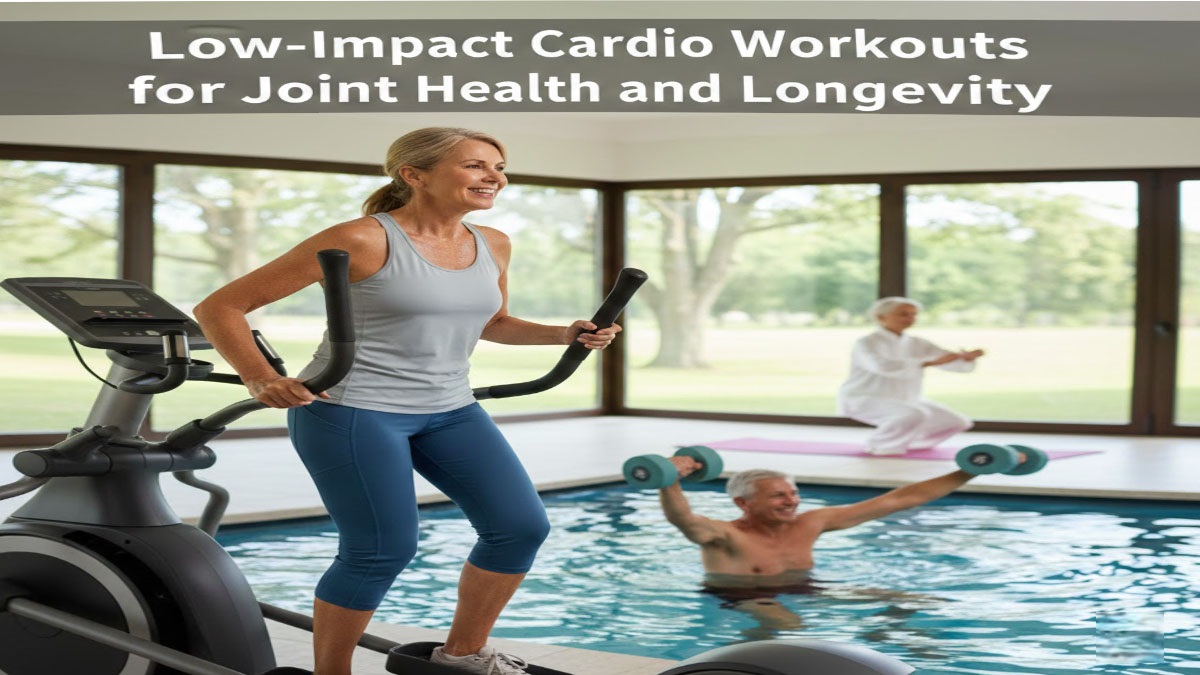
Move More, Hurt Less
For millions of people, joint pain is the barrier to exercise. Arthritic knees, achy hips, sore ankles — the very activities that would improve health can feel like they're causing damage. But 2026 research offers good news: low-impact cardio provides all the cardiovascular and longevity benefits of high-impact exercise, without the joint stress.
In fact, studies now show that low-impact exercise is not just "better than nothing" — it's optimal for joint health, reduces inflammation, and may even help regenerate cartilage. Here's everything you need to know about protecting your joints while maximizing longevity.
The 2026 Consensus
Key finding: Low-impact cardio (swimming, cycling, rowing, elliptical) provides identical cardiovascular benefits to running and other high-impact activities, with significantly lower injury rates and better long-term joint health.
Top 10 Low-Impact Cardio Activities
Swimming
Best Overall Full body, zero joint stress, improves lung capacity.
Rowing
Best Calorie Burn Uses 85% of muscles, smooth motion, excellent cardio.
Cycling (Stationary/Outdoor)
Most Accessible Easy to control intensity, great for knees, builds leg strength.
Elliptical
Gym Favorite Smooth gliding motion, arm handles add upper body work.
Walking (Brisk)
Most Natural The original low-impact cardio. Accessible to everyone.
Aqua Jogging
Injury Rehab Running in deep water with flotation belt. Zero joint stress.
Handcycling
Upper body cardio, great for those with lower body limitations.
Tai Chi / Qigong
Mind-body, improves balance, reduces stress, gentle on joints.
Kettlebell Swings (Light)
When done with proper form, swings are surprisingly low-impact cardio.
Stair Climber (Slow)
Good for glutes and legs. Keep speed moderate to protect knees.
Why Low-Impact Cardio Protects Joints
Synovial Fluid
Movement pumps synovial fluid into joints, lubricating and nourishing cartilage. This happens with any movement, regardless of impact.
Cartilage Health
Low-impact exercise stimulates chondrocytes (cartilage cells) to produce matrix, keeping cartilage healthy without damaging it.
Muscle Support
Stronger muscles (built through low-impact exercise) support and stabilize joints, reducing load on bones and cartilage.
Weight Management
Cardio helps maintain healthy weight. Every kg of weight loss reduces knee load by 3-5 kg.
Inflammation Reduction
Regular exercise reduces systemic inflammation, which contributes to arthritis and joint pain.
Bone Density
Non-impact activities like swimming don't build bone, but weight-bearing low-impact (walking, elliptical) helps maintain density.
Sample Low-Impact Workouts
30-Minute Swimming Workout
45-Minute Rowing Workout
40-Minute Cycling Workout
60-Minute Incline Walk
The Longevity Connection
Harvard Alumni Study
Researchers found that walking just 150 minutes per week added 2-3 years to life expectancy. The benefits were identical to running, just requiring more time for the same calorie burn.
Swimming and Mortality
A 20-year study found that swimmers had 50% lower all-cause mortality than sedentary people, and even lower rates than walkers or runners.
Cardiovascular Benefits
All low-impact cardio improves heart health, lowers blood pressure, improves cholesterol, and reduces heart disease risk — same as running, just without the impact.
Best Cardio for Specific Joint Issues
Knee Pain
Best: Swimming, cycling (seat height correct), elliptical, rowing
Avoid: Running, stairs, deep squats
Hip Pain
Best: Swimming, cycling (upright), elliptical, walking (flat)
Avoid: Running, stair climber, deep lunges
Ankle/Foot Pain
Best: Swimming, cycling, rowing, upper body ergometer
Avoid: Running, jumping rope, stair climber
Back Pain
Best: Swimming (backstroke), walking, elliptical (upright)
Avoid: Rowing (if form poor), high-impact activities
How to Progress Safely
Frequency
Start with 3 sessions weekly. Build to 5-6 as tolerated. Listen to joints, not just muscles.
Duration
Begin with 20-30 minutes. Add 5 minutes weekly up to 45-60 minutes per session.
Intensity
Use talk test: conversational pace is safe. Add intervals later if joints tolerate.
Variety
Cross-train between activities to distribute load and prevent overuse.
Low-Impact Cardio at Home
No-Equipment Home Routine
Recommended Equipment
Stationary Bike
Recumbent bike for back issues. Upright for general use. Spin bike for intensity.
Rower
Concept2 is gold standard. Magnetic rowers quieter, smoother.
Elliptical
Look for long stride length. Arm handles optional.
Good Shoes
Even for low-impact, proper footwear protects feet and aligns joints.
Common Myths About Low-Impact Cardio
Myth: "Low-impact doesn't burn enough calories"
Truth: Rowing and vigorous cycling burn 600+ calories/hour — as much as running.
Myth: "Only high-impact builds bone density"
Truth: Walking and elliptical are weight-bearing and help maintain bone mass.
Myth: "Swimming doesn't count as cardio"
Truth: Swimming provides identical cardiovascular benefits to running.
Myth: "You need impact to be fit"
Truth: Many elite athletes cross-train with low-impact for recovery.
The Verdict: Gentle Movement, Big Results
Key Takeaways from 2026 Research
- Low-impact works: Same cardiovascular and longevity benefits as running
- Joint protection: Zero or low stress on knees, hips, ankles
- Top choices: Swimming, rowing, cycling, elliptical, walking
- For specific pain: Choose activities that avoid painful movements
- Progress slowly: Build duration before intensity
- Cross-train: Variety prevents overuse and keeps it interesting
The Bottom Line
The 2026 research is clear: you don't need to pound pavement to get fit. Low-impact cardio provides all the heart health, longevity, and metabolic benefits of high-impact exercise — without the joint damage.
Whether you're recovering from injury, dealing with chronic joint pain, or just want to preserve your knees for the long haul, low-impact cardio is your answer. Swim, bike, row, walk — your joints will thank you, and your heart won't know the difference.
Quick Start Guide
- ✓ Choose 2-3 activities from the list above
- ✓ Start with 20-30 min, 3x weekly
- ✓ Focus on form, not speed
- ✓ Use talk test to gauge intensity
- ✓ Add 5 min weekly as tolerated
- ✓ Listen to your joints, not just your muscles