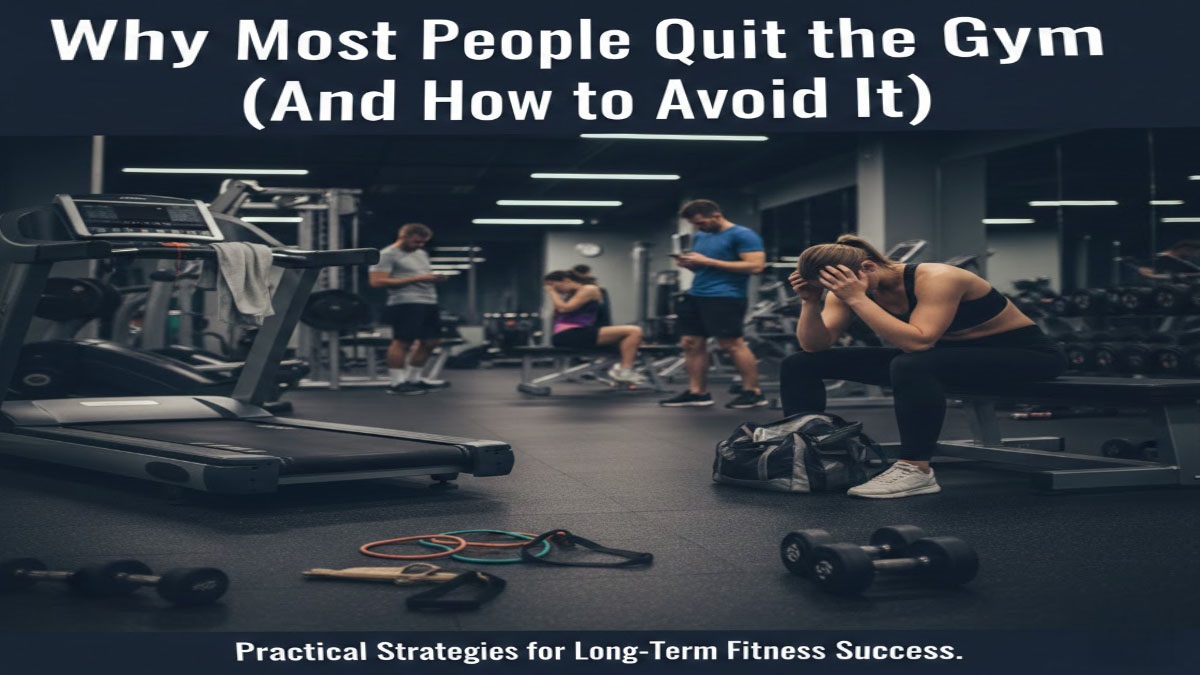
The January Phenomenon
January 1st: Gyms are packed. Treadmills full, weights busy, classes booked. February 1st: Half the people are gone. June 1st: The gym is back to its regular crowd. This cycle repeats every year, with the same predictable outcome.
In 2026, researchers have studied this phenomenon extensively. Why do people quit? What separates those who stick with it from those who don't? The answers are surprisingly consistent — and the solutions are simpler than you might think.
The 2026 Dropout Statistics
Key finding: 50% of new gym members quit within 6 months. 80% quit within 12 months. But this isn't inevitable — understanding the reasons allows you to avoid them.
The Numbers: How Many People Quit
Top 10 Reasons People Quit the Gym
#1: Starting Too Hard
New Year's resolution: go 6 days a week, 2 hours a day. Week 1: sore, exhausted. Week 2: skip a day. Week 3: quit completely.
#2: Unrealistic Expectations
Social media shows dramatic transformations in "30 days." When real results take longer, motivation dies.
#3: No Time
Work, family, life get in the way. When workouts are long and inconvenient, they're the first thing dropped.
#4: Boredom
The same treadmill, same machines, same routine. Exercise becomes a chore, not something to look forward to.
#5: Intimidation
The gym can be intimidating. Not knowing what to do, feeling judged, crowded equipment.
#6: Plateaus
Initial rapid progress slows. The scale doesn't move. Strength gains plateau. People assume it's not working.
#7: Lack of Support
No accountability partner, no one to notice if you skip, no one to share the journey with.
#8: Overtraining/Burnout
Chronic fatigue, soreness, lack of motivation — signs of overtraining. People push through until they crash.
#9: Injury
Injuries force people to stop. Without guidance, they never restart.
#10: All-or-Nothing Mindset
"I missed Monday, so this week is ruined." "I ate one cookie, might as well eat the whole box." Perfectionism is the enemy of consistency.
The Dropout Timeline
High motivation, excitement. Risk: doing too much too soon.
Soreness, time commitment, slow progress. First dropout wave.
Habit not yet formed. Life gets in the way. Second dropout wave.
Progress slows. "Is this working?" Third dropout wave.
50% of original joiners are gone. Those left often stick long-term.
20% remain. They've built habits, identity, and consistency.
How to Avoid Quitting: Science-Backed Strategies
Start Small
2-3 sessions weekly, 30-45 minutes. Build consistency before adding intensity. You can't sustain what you can't recover from.
Schedule It
Put workouts in your calendar like appointments. Decide in advance, not daily. Remove the decision.
Find Enjoyment
Try different activities until you find what you love. If you hate the gym, don't go. Walk, hike, swim, bike, dance. Enjoyment is the secret to consistency.
Get Support
Workout buddy, group classes, trainer, online community. Accountability doubles adherence rates.
Track Progress
Not just weight. Strength, endurance, energy, sleep, how clothes fit. Celebrate all wins.
Be Flexible
Have backup plans. Home workout for busy days. 20-minute sessions when time is tight. Something beats nothing.
Set Process Goals
"Work out 3x this week" not "lose 10kg." Process goals are in your control and build consistency.
Prioritize Recovery
Rest days, sleep, nutrition. Burnout is the enemy. Recovery is when you grow.
The Mindset Shift: From "Have to" to "Get to"
Reframe Your Thinking
- Instead of: "I have to go to the gym."
- Try: "I get to move my body. Many people can't."
- Instead of: "This workout is so hard."
- Try: "This is making me stronger."
- Instead of: "I'm not seeing results."
- Try: "I'm building habits that will last."
Build an Identity That Sticks
Identity-Based Habits
Instead of "I'm trying to exercise," shift to "I'm someone who exercises." Each workout reinforces that identity. When you miss a day, it doesn't change who you are — you're still an exerciser who had an off day.
The Golden Rule: Never Miss Twice
The Most Important Rule
Missing one workout is fine. Life happens. Missing two in a row starts a new habit — of not exercising. Get back on track before the second miss.
Practical Checklist: Your Gym Survival Guide
Week 1-4
- Schedule 3 workouts weekly
- Keep workouts 30-45 minutes
- Focus on learning, not intensity
- Celebrate showing up
Month 2-3
- Increase to 3-4 sessions if desired
- Try one new activity
- Track progress beyond weight
- Find an accountability partner
Month 4-6
- Vary routine (new exercises, classes)
- Set a new goal
- Schedule rest weeks
- Reflect on how far you've come
The Verdict: You Don't Have to Quit
Key Takeaways from 2026 Research
- Starting too hard is the #1 reason people quit. Start small.
- Unrealistic expectations kill motivation. Be patient.
- Enjoyment is the secret to consistency. Find movement you love.
- Accountability doubles adherence rates.
- Flexibility beats perfectionism. Something is always better than nothing.
- Never miss twice — the golden rule of consistency.
The Bottom Line
The 2026 research is clear: quitting the gym is predictable, but it's not inevitable. Most people quit for reasons that can be prevented with the right approach. Start small, be patient, find enjoyment, get support, and be flexible.
The people who stick with exercise long-term aren't more motivated than you. They've built habits and systems that carry them through the days when motivation is low. You can too. The gym will still be there in June, in December, and next year. The question is: will you?
Your 30-Day No-Quit Challenge
- ✅ Week 1: 3 workouts, 30 min each. Celebrate showing up.
- ✅ Week 2: 3 workouts. Try one new activity.
- ✅ Week 3: 3 workouts. Find an accountability buddy.
- ✅ Week 4: 3 workouts. Reflect: what do you enjoy?
- ✅ Remember: You don't need to be perfect. You just need to not quit.