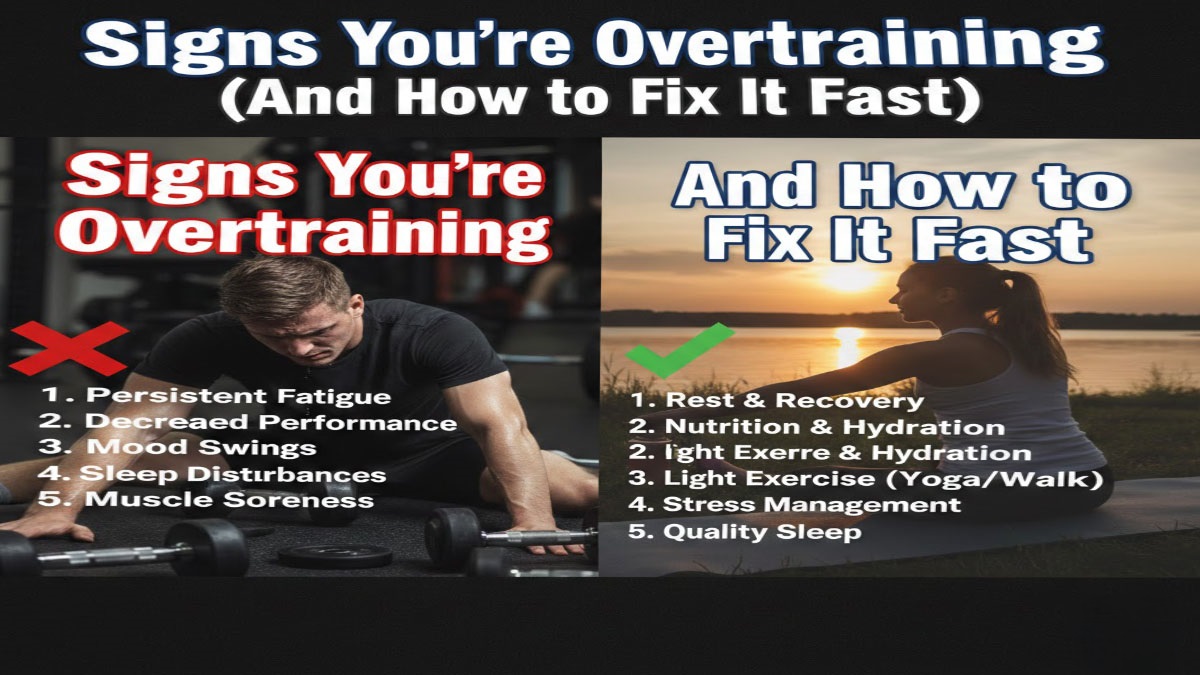
When More Becomes Less
You're working hard. Maybe too hard. Your performance is dropping. You're always tired. You're getting sick. But you push through anyway — because that's what dedicated people do, right?
Wrong. This is overtraining syndrome, and it's more common than you think. In 2026, sports scientists have identified clear warning signs. Ignoring them doesn't make you tough — it makes you injured, sick, and stalled. Here's how to recognize overtraining and fix it fast.
The 2026 Research
Key finding: Overtraining syndrome is a complex condition involving hormonal, neurological, and immune dysfunction. It's not just being tired — it's a systemic breakdown that requires active recovery to fix.
12 Warning Signs You're Overtraining
Performance Decline
Persistent Fatigue
Elevated Resting Heart Rate
Mood Changes
Sleep Disturbances
Frequent Illness
Persistent Soreness
Appetite Loss
Unexpected Weight Loss/Gain
Menstrual Cycle Changes
Low Libido
Loss of Enthusiasm
Overtraining Signs by Category
Performance Signs
- Strength/endurance declining
- Can't complete usual workouts
- Longer recovery needed
- Poor coordination
Physical Signs
- Persistent fatigue
- Elevated resting heart rate
- Persistent soreness
- Frequent illness
- Sleep disturbances
Psychological Signs
- Irritability, mood swings
- Depression, anxiety
- Loss of motivation
- Brain fog
- Dreading workouts
Hormonal Signs
- Appetite changes
- Weight changes
- Menstrual irregularities
- Low libido
Quick Self-Assessment
Morning Resting Heart Rate Test
Measure your heart rate first thing in the morning for 3 consecutive days. If it's 5+ beats above your normal average, you may be overreaching and need rest.
How Many Signs Do You Have?
- 1-2 signs: Probably just tired. Take an extra rest day.
- 3-5 signs: Overtraining possible. Deload week recommended.
- 6+ signs: Likely overtraining. Take a full week off, then reassess.
How to Fix Overtraining Fast
1. Complete Rest (3-7 Days)
Full rest from structured exercise. Light walking only if you feel up to it. No gym, no intense cardio.
2. Sleep 8-10 Hours
Prioritize sleep. Go to bed earlier. Naps if needed. Sleep is when your body repairs.
3. Increase Protein and Calories
Your body needs fuel to repair. Increase protein (2.0-2.2g/kg) and overall calories. Don't diet while recovering.
4. Stress Management
Meditation, nature, deep breathing. Lower overall stress load.
5. Deload When Returning
When you return, start at 50-60% of normal volume. Build back slowly.
6. Review Your Program
Identify what caused it. Too much volume? Too little recovery? Not enough sleep? Fix the root cause.
Recovery Timeline
Mild Overtraining
Rest, sleep, nutrition. Return at 50% volume.
Moderate Overtraining
Full rest week, then deload week. Gradual return.
Severe Overtraining
Medical supervision may be needed. Slow, careful return.
Preventing Overtraining Long-Term
Schedule Deloads
Every 4-8 weeks, reduce volume by 40-50%. Non-negotiable.
Prioritize Sleep
7-9 hours nightly. Nothing replaces sleep.
Eat Enough
1.6-2.2g/kg protein, adequate carbs and calories.
Listen to Your Body
If you're exhausted, take a rest day. One day won't kill gains.
Manage Stress
Life stress + training stress = total load. Keep total manageable.
Active Recovery
Walking, light movement on rest days helps recovery.
Common Overtraining Myths
Myth: "You're just being lazy"
Truth: Overtraining is a real physiological condition. It's not lack of willpower.
Myth: "Push through it"
Truth: Pushing through makes it worse and can lead to injury and long-term burnout.
Myth: "It only happens to elite athletes"
Truth: Anyone can overtrain, especially with poor recovery habits.
Myth: "One rest day fixes it"
Truth: True overtraining requires extended rest and deload to recover.
The Verdict: Listen to Your Body
Key Takeaways from 2026 Research
- Overtraining is real: Hormonal, neurological, immune dysfunction
- Warning signs: Performance drop, fatigue, mood changes, elevated heart rate
- Fix it fast: Complete rest, more sleep, more food, stress management
- Prevent it: Scheduled deloads, adequate recovery, listen to your body
- Ignore it at your peril: Can lead to injury, illness, long-term burnout
The Bottom Line
The 2026 research is clear: overtraining is not a badge of honor. It's a sign that your body needs rest. Pushing through doesn't make you tough — it makes you injured, sick, and stalled.
Learn the signs. Take the rest. Eat more. Sleep more. Your gains will return faster than if you'd kept grinding into the ground. Listen to your body — it knows what it needs.
Quick Reference: Overtraining Checklist
- ✅ Performance dropping? → Rest needed
- ✅ Always tired? → Sleep more
- ✅ Mood off? → Stress management
- ✅ Resting heart rate up? → Take a break
- ✅ 3+ signs? → Deload now
- ✅ 6+ signs? → Full week off