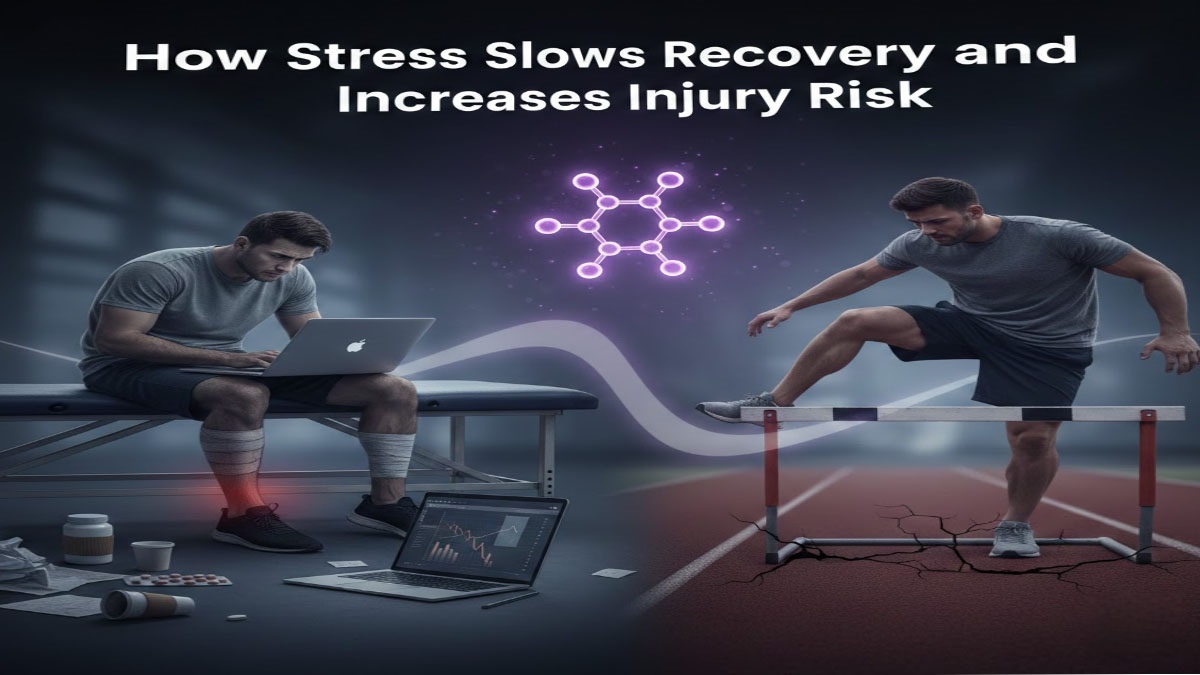
The Hidden Saboteur
You're sleeping enough. You're eating right. You're training hard. But you're not recovering. You're getting injured. What's going on?
The answer might not be in your training log. It might be in your head. In 2026, research increasingly shows that chronic stress is a major factor in both recovery and injury risk. Stress hormones, especially cortisol, can completely sabotage your body's ability to heal and make you more vulnerable to injury.
Here's how stress slows recovery and increases injury risk — and what you can do about it.
The 2026 Consensus
Key finding: Stress responses are the strongest psychological risk factor for acute injuries. Chronic stress elevates cortisol, which impairs tissue repair, suppresses immune function, disrupts sleep, and increases inflammation — all of which slow recovery and increase injury risk.
The Stress Response: Cortisol and the HPA Axis
The HPA Axis
The hypothalamic-pituitary-adrenal (HPA) axis is your body's central stress response system. When you perceive stress, it triggers a cascade of hormones culminating in cortisol release .
Cortisol: The Stress Hormone
Cortisol is essential for survival — it mobilizes energy, regulates inflammation, and helps you respond to threats. But when cortisol stays elevated due to chronic stress, it becomes harmful .
How Stress Increases Injury Risk
Strongest Psychological Risk Factor
"Stress responses are the strongest psychological risk factor for acute injuries." A major consensus statement from seven experts confirmed that psychological stress directly increases injury risk .
Military Training Study
In Marine Corps Officer Candidates, higher baseline perceived stress and cortisol levels were associated with injury and attrition from training. Those who couldn't adapt to stress had worse outcomes .
Psychosocial Risk Factors
Intra- and interpersonal factors, as well as sociocultural factors, are demonstrated psychosocial risk factors for overuse injuries. Stress management interventions have been successfully implemented to prevent injuries .
How Stress Slows Recovery: 5 Key Mechanisms
1. Increased Inflammation
When cortisol is chronically elevated, it can paradoxically increase inflammation. Normally, inflammation helps contain injury and initiates healing, but prolonged inflammation prevents tissue repair and can lead to chronic pain syndromes .
2. Immune Suppression
Chronic stress suppresses immune function, increasing susceptibility to infections and slowing wound healing. This leaves you vulnerable to infection-related setbacks that extend recovery time .
3. Sleep Disruption
Healing processes like cell regeneration and tissue repair are accelerated during deep sleep. Chronic stress disrupts sleep quality, interrupting these critical restorative stages and slowing physical recovery .
4. Reduced Blood Flow
Stress causes vasoconstriction (narrowing of blood vessels), reducing blood flow to extremities and injured areas. This means less oxygen and nutrient delivery to tissues, hindering repair .
5. Increased Pain Sensitivity
Stress can amplify the experience of pain (pain catastrophizing). This can turn minor, manageable pain into a major obstacle, making you less likely to engage in necessary rehabilitation .
Cortisol and Wound Healing
Research has consistently found that stress is linked to poor wound and tissue healing. Stress causes changes to the chemicals found naturally around an injury site, which can impair immune function and delay healing .
The Vicious Cycle
How Injury Creates More Stress
Injury itself becomes a source of stress: financial concerns, fear of job loss, stigma, and the frustration of being unable to train all compound the original stress load. This creates a feedback loop that impedes recovery .
At the Cellular Level: Mitochondria and Telomeres
Bioenergetic Stress
2026 research reveals that chronic stress creates a "bioenergetic insufficiency" — a mismatch between stress-induced energetic demand and mitochondrial energy output. This limits cellular repair and accelerates aging at the cellular level .
Repeated activation of stress-response pathways without adequate metabolic recovery progressively compromises the body's ability to maintain and repair tissues .
Signs Stress Is Affecting Your Recovery
Slow Healing
Minor injuries take longer than expected to heal.
Poor Sleep
Trouble falling asleep, waking frequently, not feeling refreshed.
Frequent Illness
Getting sick often — immune system compromised.
Persistent Fatigue
Tired even after sleeping well.
Persistent Soreness
Muscles and joints stay sore longer than usual.
Brain Fog
Difficulty focusing, forgetfulness.
How to Fix It: Stress Management Strategies
Prioritize Sleep
7-9 hours. Non-negotiable for recovery. Sleep is when your body repairs.
Mindfulness Meditation
10 minutes daily reduces cortisol. Studies show mindfulness interventions prevent injuries and improve recovery .
Social Support
Connect with friends, family, community. Social support reduces negative reactions to injury and stress .
Cognitive-Behavioral Techniques
Cognitive-behavioral based intervention programs reduce negative reactions and improve coping .
Active Recovery
Light walking, easy movement. Reduces stress and promotes healing.
Time in Nature
20 minutes in nature drops cortisol significantly. Green space, trees, water.
Journaling
Writing down worries gets them out of your head. Reduces rumination and anxiety.
Nutrition
Stable blood sugar = stable mood. Protein at every meal, omega-3s, magnesium.
Rest Days
1-3 full rest days weekly. Your nervous system needs breaks from training.
Practical Stress Management for Athletes
Key Recommendations from 2026 Research
- Screen athletes frequently for psychosocial stress and perceived recovery
- Incorporate elements of mindfulness and acceptance-based practices
- Provide as much social support as possible
- Form strong relationships with athletes and colleagues
- Educate about organizational injury risk factors
- Utilize strategies that facilitate athletes' sense of competence, autonomy, and relatedness
The Verdict: Manage Stress to Recover and Stay Healthy
Key Takeaways from 2026 Research
- Stress directly increases injury risk: It's the strongest psychological risk factor
- Stress slows recovery: Through inflammation, immune suppression, sleep disruption, reduced blood flow, and increased pain
- Cortisol is the culprit: Chronic elevation creates a catabolic, pro-inflammatory state
- Mindfulness and social support work: Evidence-based interventions reduce stress and improve outcomes
- Sleep is non-negotiable: 7-9 hours for hormone regulation and tissue repair
- Listen to your body: Slow healing, persistent soreness, fatigue are warning signs
The Bottom Line
The 2026 research is clear: stress isn't just in your head — it's in your muscles, your immune system, and your cells. Chronic stress directly increases injury risk and dramatically slows recovery. Managing stress isn't optional; it's essential for staying healthy and performing at your best.
Prioritize sleep. Practice mindfulness. Connect with others. Take rest days. Your body — and your recovery — will thank you.
Your Stress Management Starter Kit
- ✅ 7-9 hours sleep, consistent bedtime
- ✅ 10 minutes mindfulness meditation daily
- ✅ Connect with a friend or family member
- ✅ 20 minutes in nature (walk in park)
- ✅ 1-3 full rest days weekly
- ✅ If injured, seek social support