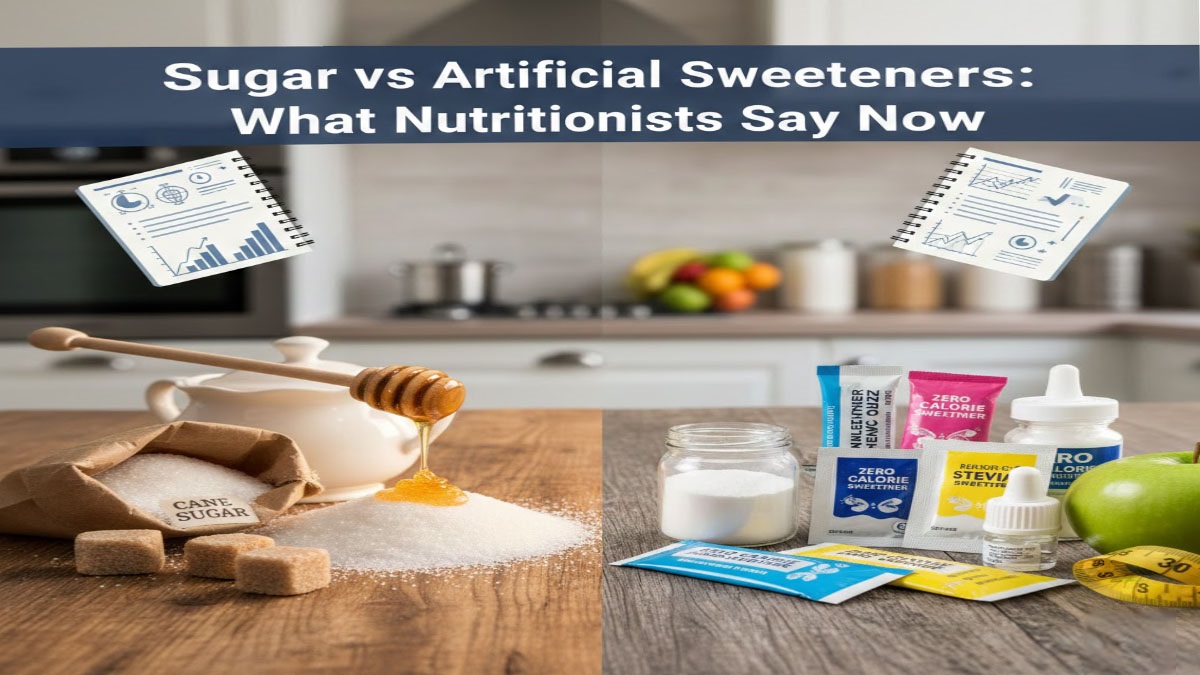
The Sweet Dilemma
For decades, the choice seemed simple: sugar tastes good but is bad for you; artificial sweeteners offer zero calories but come with their own controversies. But 2026 research has added new layers to this debate. Studies on gut health, metabolic effects, and long-term outcomes have given nutritionists a more nuanced view.
The truth is, neither sugar nor artificial sweeteners are "healthy" in the traditional sense. But when you have to choose — in your coffee, your yogurt, your soda — which is the lesser evil? Here's what the latest science says.
The 2026 Consensus
Key finding: Both sugar and artificial sweeteners have drawbacks. Sugar contributes to calorie excess and metabolic disease. Artificial sweeteners may alter gut microbiome and glucose responses in some people. The healthiest choice is to reduce overall sweetness preference.
Sugar vs Artificial Sweeteners: Head-to-Head
Sugar
Sucrose, glucose, fructose, high-fructose corn syrup, honey, maple syrup, agave.
Artificial Sweeteners
Aspartame, sucralose, saccharin, stevia, monk fruit, erythritol, xylitol.
The Case Against Sugar
Added Sugar Guidelines
Men: ≤36g (9 tsp) daily. Women: ≤25g (6 tsp) daily. Average American consumes 77g daily — triple the limit.
Metabolic Effects
High sugar intake linked to obesity, type 2 diabetes, fatty liver disease, heart disease, and inflammation.
Fructose Specifics
Excess fructose (from sugar, HFCS) is metabolized in liver, contributing to fatty liver and insulin resistance.
Sugar Verdict
Excess sugar is unequivocally harmful. It provides empty calories, spikes blood sugar, and contributes to chronic disease. Most people should reduce intake significantly.
The Case Against Artificial Sweeteners
Gut Microbiome Effects
Some artificial sweeteners (saccharin, sucralose) alter gut bacteria composition, potentially affecting glucose tolerance in some individuals.
Glucose Response Variability
Not everyone responds the same. Some people show glucose spikes after artificial sweeteners due to microbiome changes. Personalized response matters.
Psychological Effects
Sweet taste without calories may maintain sugar cravings and preference for sweetness, making it harder to reduce overall sugar intake.
Artificial Sweetener Verdict
Artificial sweeteners are not harmful in typical amounts for most people, but they're not completely inert. They may affect gut health and glucose responses in some individuals. The "healthiest" option is to reduce overall sweetness.
Types of Sweeteners: What the Research Says
Stevia
Plant-derived, zero calories. Studies show no negative effects on gut health. May even have antioxidant properties. Best choice among sweeteners.
Monk Fruit
Plant-derived, zero calories. Similar to stevia. No reported negative effects. Also a top choice.
Aspartame
Extensively studied. Safe at normal intake. Some studies link to gut microbiome changes. Phenylalanine concern for those with PKU.
Sucralose (Splenda)
Studies show potential gut microbiome alterations. Effects vary by individual. May affect glucose responses in some.
Saccharin (Sweet'N Low)
Most studies showing gut microbiome changes used saccharin. Effects reversible. Avoid if sensitive.
Erythritol / Xylitol
Sugar alcohols. Lower calorie, minimal blood sugar impact. Xylitol good for teeth. May cause digestive issues in large amounts.
Weight Loss: Which Helps More?
Systematic Review (2026)
Analysis of 12 randomized controlled trials comparing sugar vs artificial sweeteners for weight loss:
- Replacing sugar with artificial sweeteners: Modest weight loss (1-2 kg over 12 weeks) due to calorie reduction
- No difference in long-term weight loss when calories are controlled
- Key factor: Artificial sweeteners help if they replace high-calorie sugary foods, not if they trigger compensatory eating
Weight Loss Verdict
Artificial sweeteners can help with weight loss when used to replace sugar. But water or unsweetened beverages are even better.
Gut Health: The Emerging Science
2026 Gut Microbiome Research
The gut microbiome is the new frontier in sweetener research. Key findings:
- Individual response varies: Some people's gut bacteria are more sensitive to artificial sweeteners
- Effects are reversible: Microbiome changes typically resolve when sweeteners are stopped
- Dose matters: Typical dietary intake unlikely to cause major issues for most
- Plant-based sweeteners (stevia, monk fruit): Fewer reported gut effects
Dental Health: Clear Winner
Dental Verdict
Artificial sweeteners win. Sugar feeds cavity-causing bacteria. Xylitol and erythritol actually inhibit bacterial growth. If you must have sweets, choose sugar-free for your teeth.
What Nutritionists Recommend Now (2026)
Best Choice
Water, unsweetened tea/coffee, sparkling water — Train your palate to enjoy less sweetness.
Good Alternatives
Stevia, monk fruit, erythritol, xylitol — Plant-based or sugar alcohols with good safety profiles.
Use in Moderation
Aspartame, sucralose, saccharin — Safe for most, but potential gut effects in some.
Limit Significantly
Sugar, HFCS, honey, maple syrup — All are still sugar. Treat as occasional treats, not daily staples.
Common Myths Debunked
Myth: "Artificial sweeteners cause cancer"
Truth: Decades of research show no cancer link at human consumption levels. Regulatory agencies worldwide deem them safe.
Myth: "Honey and maple syrup are healthy"
Truth: They're still sugar — just with trace nutrients. They affect blood sugar similarly.
Myth: "Artificial sweeteners make you crave more sugar"
Truth: Some studies show this, others don't. Individual response varies. If you find they trigger cravings, avoid them.
Myth: "Natural sugars are fine in any amount"
Truth: Excess sugar from any source (cane, honey, fruit juice) contributes to health problems.
Practical Guide: How to Choose
In Coffee/Tea
- Best: Drink unsweetened
- Next: Stevia or monk fruit
- Avoid: Sugar, flavored syrups
In Soda
- Best: Sparkling water
- Next: Diet soda (moderate)
- Avoid: Regular soda entirely
In Cooking
- Use spices (cinnamon, vanilla) for sweetness
- Stevia or erythritol for baking
- Reduce sugar in recipes gradually
Reduce Sweetness Preference
- Gradually reduce sweetener amounts
- Give palate 2-4 weeks to adapt
- Fruits become sweeter naturally
Special Considerations
Diabetes
Artificial sweeteners can help reduce sugar intake and manage blood glucose. Monitor individual response.
Pregnancy
Most artificial sweeteners considered safe in moderation. Aspartame safe except for PKU. Consult doctor.
Children
Best to avoid developing sweet preference. Water and milk should be primary beverages.
IBS / Gut Issues
Some sugar alcohols (erythritol, xylitol) may cause digestive distress. Start with small amounts.
The Verdict: What Nutritionists Say Now
Key Takeaways from 2026 Research
- Best choice: Reduce overall sweetness preference. Train your palate to enjoy less sweet foods.
- If you must sweeten: Choose stevia, monk fruit, erythritol — plant-based with best safety profiles.
- Artificial sweeteners: Safe for most in moderation, but may affect gut health in some individuals.
- Sugar: Treat as occasional treat, not daily staple. Excess sugar is clearly harmful.
- Individual response matters: Pay attention to how your body responds. If artificial sweeteners trigger cravings or digestive issues, avoid them.
The Bottom Line
The 2026 research doesn't declare a clear winner between sugar and artificial sweeteners — because neither is optimal. The healthiest path is to gradually reduce your overall preference for sweetness.
If you're currently consuming excess sugar, switching to artificial sweeteners can be a helpful stepping stone. But the ultimate goal should be to enjoy foods and beverages in their less-sweet natural state. Water, unsweetened coffee, and whole fruits should become your new normal. Your taste buds will adapt in 2-4 weeks — and your health will thank you.
Quick Decision Guide
- ✅ Daily: Water, unsweetened beverages, whole fruit
- ✅ Occasional: Stevia/monk fruit sweetened drinks
- ⚠️ Moderate: Diet soda, artificial sweeteners (if no side effects)
- ❌ Limit: Sugar, honey, maple syrup, regular soda