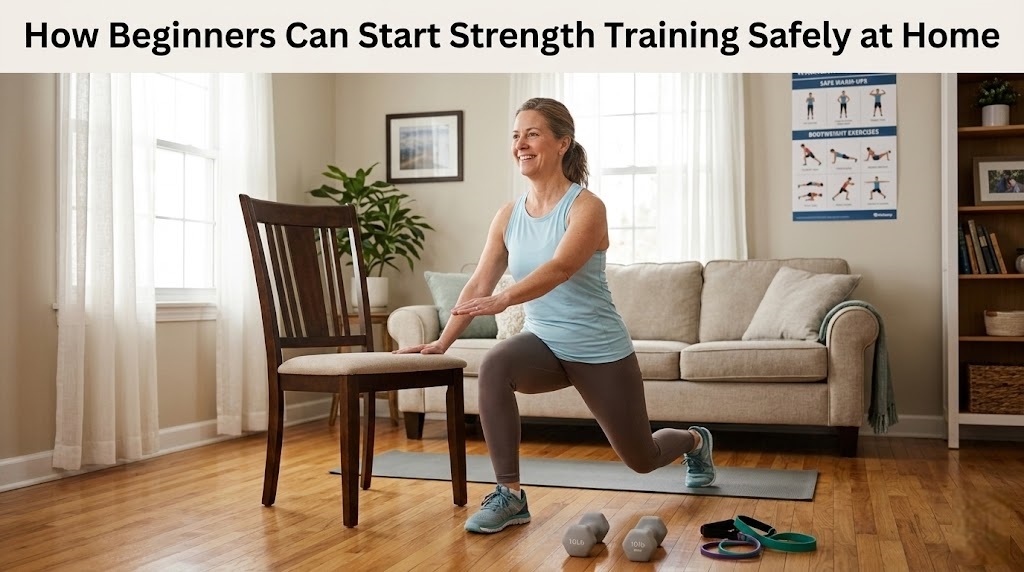
Starting Strong, Staying Safe
The gym can be intimidating. The equipment is unfamiliar, the crowd can be overwhelming, and it's easy to feel like everyone is watching you. That's why starting at home is often the best choice for beginners.
In 2026, research from the Journal of Strength and Conditioning Research confirms that home-based strength training is not only effective but can be safer than gym training when proper guidelines are followed. Here's how to start your strength journey at home — safely and effectively.
The 2026 Research
Key finding: Beginners who start with bodyweight exercises at home have lower injury rates and higher long-term adherence than those who start in gyms. The key is proper form, gradual progression, and listening to your body.
Safety First: 5 Rules for Home Training
1. Watch Yourself
Set up your phone to record your sets. Review your form immediately. Compare to trusted tutorials. Without a coach or mirror, video is your best feedback tool.
2. Warm Up Properly
5-10 minutes of dynamic movement before each session. March in place, arm circles, leg swings, bodyweight squats. Cold muscles tear more easily.
3. Listen to Your Body
Discomfort is normal. Sharp pain is not. If something hurts (not just burns), stop. Adjust form or choose a different exercise. No workout is worth injury.
4. Clear Your Space
Remove obstacles. Ensure you have enough room to move in all directions. A cluttered space leads to tripping, bumping, and injury.
5. Progress Gradually
The 10% rule: don't increase volume or intensity by more than 10% per week. Your connective tissue (tendons, ligaments) adapts slower than muscles.
6 Essential Beginner Exercises
Bodyweight Squat
The foundation of lower body strength. Teaches proper movement pattern before adding weight.
Push-Up
The ultimate upper body pushing exercise. Builds chest, shoulders, and triceps.
Glute Bridge
Activates the glutes and teaches hip extension. Essential for posterior chain development.
Bird Dog
Builds core stability and coordination. Teaches anti-rotation and spinal control.
Inverted Row
The best beginner pulling exercise. Use a table, sturdy bar, or suspension trainer.
Plank
Builds core endurance and teaches proper bracing. Foundation for all other lifts.
Your First Home Workout
Beginner Full Body Routine (3 rounds, rest 60 sec between rounds)
- Bodyweight Squats 10-15 reps
- Knee Push-Ups (or full) 8-12 reps
- Glute Bridges 12-15 reps
- Bird Dogs 8 each side
- Plank 20-30 seconds
How to Use This Routine
- Perform 2-3 times per week with at least one rest day between sessions
- Focus on form, not speed
- When you can complete all reps with good form, increase reps or add a set
- After 4 weeks, try the harder progressions
Form Guide: Common Mistakes to Avoid
Squat Mistake: Knees Caving In
Fix: Push knees out toward toes. Imagine spreading the floor apart. Weaker glutes often cause this.
Push-Up Mistake: Sagging Hips
Fix: Squeeze glutes and abs. Your body should form a straight line. Drop to knees if you can't maintain form.
Glute Bridge Mistake: Overarching Back
Fix: Don't lift hips too high. Stop when you feel glutes contract, before lower back takes over.
Plank Mistake: Hips Too High
Fix: Lower hips until body is straight. Think of pulling belly button toward spine.
Minimal Equipment, Maximum Results
Nice to Have
- Yoga mat (comfort for floor work)
- Resistance bands (add progressive overload)
- Pull-up bar (if you have a doorway)
- Light dumbbells or water jugs
Essential
- Comfortable clothes
- Supportive shoes (or barefoot if comfortable)
- Water bottle
- Phone to record yourself
- Timer or stopwatch
4-Week Beginner Progression Plan
Week 1-2: Foundation
Goal: Master form, 2-3 sessions weekly
Week 3-4: Building
Goal: Increase reps, add variations, 3 sessions weekly
Common Beginner Questions
❓ How often should I train?
Start with 2-3 sessions per week. Your muscles need 48 hours to recover between sessions. More is not better for beginners.
❓ What if I can't do a full push-up?
Start with knee push-ups or incline push-ups (hands on a table/chair). Progress gradually. Everyone starts somewhere.
❓ How do I know if my form is right?
Record yourself. Compare to trusted tutorials. If something feels "off" or painful, stop and reassess. Form > reps.
❓ When should I add weight?
When you can perform all reps with perfect form and the movement feels easy. Usually after 4-6 weeks of bodyweight work.
The Verdict: Start Safe, Stay Consistent
Key Takeaways from 2026 Research
- Start with bodyweight: Master form before adding weight
- Record yourself: Video feedback is essential without a coach
- Warm up properly: 5-10 minutes dynamic movement prevents injury
- Listen to your body: Sharp pain means stop, adjust, or regress
- Progress gradually: 10% rule applies to home training too
- Consistency beats intensity: 2-3 sessions weekly, every week
The Bottom Line
The 2026 research is clear: you can build significant strength at home, safely, as a beginner. The key is prioritizing form over weight, progressing gradually, and listening to your body. Start with the exercises above, follow the safety guidelines, and be consistent. Your future self will thank you.
Your First Week Checklist
- ✅ Clear your workout space
- ✅ Learn one exercise at a time (watch videos, practice form)
- ✅ Do your first workout (take it easy!)
- ✅ Record yourself and check form
- ✅ Rest a day, then do it again
- ✅ Celebrate showing up — that's the real win