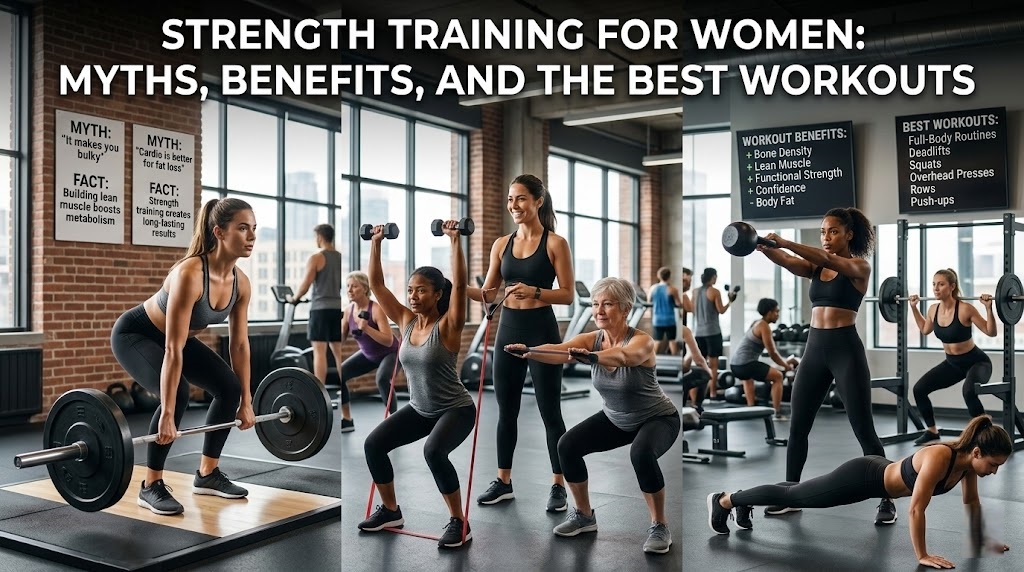
The Rise of Women's Strength Training
For decades, women were told to stick to cardio and light weights — that lifting heavy would make them "bulky" and that strength training wasn't for them. In 2026, we know better.
A growing body of research has examined how women respond to strength training, and the results are overwhelmingly positive. From improved body composition to bone health, metabolic benefits, and hormonal balance, lifting weights may be even more beneficial for women than for men.
The 2026 Research
Key finding: Women respond to strength training similarly to men in terms of relative muscle growth, but with unique benefits for bone density, metabolic health, and hormonal balance. The "bulky" myth is scientifically unfounded.
5 Myths About Women and Strength Training
Myth #1: Lifting heavy makes women bulky
Myth #2: Women should use different exercises than men
Myth #3: Light weights with high reps "tone" better
Myth #4: Cardio is better for fat loss
Myth #5: Strength training is dangerous for women's bodies
Science-Backed Benefits for Women
Bone Density
Women are at higher risk for osteoporosis. Weight-bearing exercise stimulates bone formation, increasing density and reducing fracture risk by 30-50%. This is especially important during and after menopause.
Metabolic Health
Muscle is metabolically active tissue. More muscle = higher resting metabolism. Women who strength train have better insulin sensitivity and lower risk of metabolic syndrome.
Hormonal Balance
Strength training can help regulate hormones, reduce PMS symptoms, and improve body composition during perimenopause and menopause when hormonal shifts typically cause fat gain and muscle loss.
Cardiovascular Health
Contrary to myth, strength training improves cardiovascular health — lowering blood pressure, improving cholesterol profiles, and reducing heart disease risk.
Mental Health
Studies show strength training reduces anxiety and depression in women more effectively than cardio alone. The sense of empowerment and capability is transformative.
Functional Strength
Daily activities become easier. Carrying groceries, lifting children, moving furniture — strength training builds real-world capability and independence.
What 2026 Research Shows
Muscle Growth Comparison
When training volume is matched, women build muscle at the same relative rate as men. The absolute amount is less due to lower starting muscle mass, but the response to training is identical.
Menopause and Strength
Women who strength trained 2-3x weekly during menopause maintained bone density and prevented the typical 5-10% muscle loss. They also reported fewer hot flashes and better sleep.
Recovery Differences
Women recover faster between sets and between workouts than men, allowing for potentially higher training frequencies with proper programming.
Body Composition Study
Over 12 weeks, women who strength trained lost 4.2kg fat and gained 1.5kg muscle. Cardio-only group lost 3.8kg fat but also lost 0.8kg muscle. Strength training produced better body composition changes.
Best Workouts for Women (2026 Research)
Full Body (3x/week)
Perfect for beginners and general fitness
- Barbell Squats: 3x8-10
- Bench Press or Push-Ups: 3x8-12
- Barbell Rows: 3x8-10
- Romanian Deadlifts: 3x10-12
- Overhead Press: 3x8-10
- Planks: 3x45 sec
Upper/Lower Split (4x/week)
Great for intermediate lifters
- Upper A: Bench, Rows, OHP, Pull-Ups
- Lower A: Squats, RDLs, Lunges, Calf Raises
- Upper B: Incline Press, Lat Pulldowns, Dips, Face Pulls
- Lower B: Deadlifts, Hip Thrusts, Leg Press, Leg Curls
Glute-Focused (2-3x/week)
For those wanting to emphasize glutes
- Barbell Hip Thrusts: 4x8-12
- Bulgarian Split Squats: 3x8-10 each leg
- Romanian Deadlifts: 3x10-12
- Cable Kickbacks: 3x15-20 each leg
- Hip Abductions: 3x15-20
Strength Focus (3x/week)
For building maximal strength
- Squats: 4x5 (80-85%)
- Bench Press: 4x5 (80-85%)
- Deadlifts: 3x5 (80%)
- OHP: 3x8-10 (lighter)
- Pull-Ups: 3x max
Hormonal Considerations for Women
Training Around Your Cycle
2026 research suggests that women may benefit from adjusting training intensity based on menstrual cycle phases:
- Follicular phase (days 1-14, post-period): Higher energy, better recovery, ideal for heavy lifting and PR attempts
- Luteal phase (days 15-28, pre-period): Lower energy, higher fatigue, focus on moderate intensity, higher reps, and more recovery
Listen to your body — these are guidelines, not rules. Some women feel great throughout their cycle; others need more adjustments.
Nutrition for Women Who Lift
Protein
1.6-2.2g per kg bodyweight. Essential for muscle repair and recovery. Women often undereat protein — prioritize it at every meal.
Carbohydrates
Don't fear carbs. They fuel your workouts and support hormone function. Active women need 3-5g per kg depending on activity level.
Fats
Healthy fats (avocado, nuts, olive oil) support hormone production. 20-30% of calories from fat is appropriate.
Calcium & Vitamin D
Crucial for bone health. Ensure adequate intake through dairy, leafy greens, or supplements.
Getting Started: A 4-Week Plan
Week 1-2: Learning Phase
- 2-3 full body sessions per week
- Focus on form, not weight
- Record yourself to check technique
- Goal: Learn the movements
Week 3-4: Building
- 3 full body sessions per week
- Gradually increase weight
- Add one extra set per exercise
- Goal: Build confidence and strength
The Verdict: Lift Heavy, Reap the Rewards
Key Takeaways from 2026 Research
- Don't fear the weights: You won't get bulky — you'll get strong, lean, and confident
- Same exercises work: Squats, deadlifts, presses, rows — they work for everyone
- Bone health is critical: Strength training is the best defense against osteoporosis
- Metabolic benefits: More muscle = higher metabolism = easier weight management
- Hormonal support: Lifting helps regulate hormones through all life stages
- Mental strength: The confidence from getting stronger is transformative
The Bottom Line
The 2026 research is clear: strength training is arguably more important for women than for men. The benefits extend far beyond aesthetics — bone density, metabolic health, hormonal balance, and mental wellbeing all improve dramatically.
Stop doing endless cardio and light weights. Start lifting heavy (for you). Your body — and your future self — will thank you.
Your First Week Checklist
- ✅ Find a program (full body 2-3x weekly)
- ✅ Learn proper form (watch videos, record yourself)
- ✅ Start lighter than you think — master technique first
- ✅ Eat enough protein (1.6g/kg)
- ✅ Be patient — results take time, but they come
- ✅ Celebrate every small win