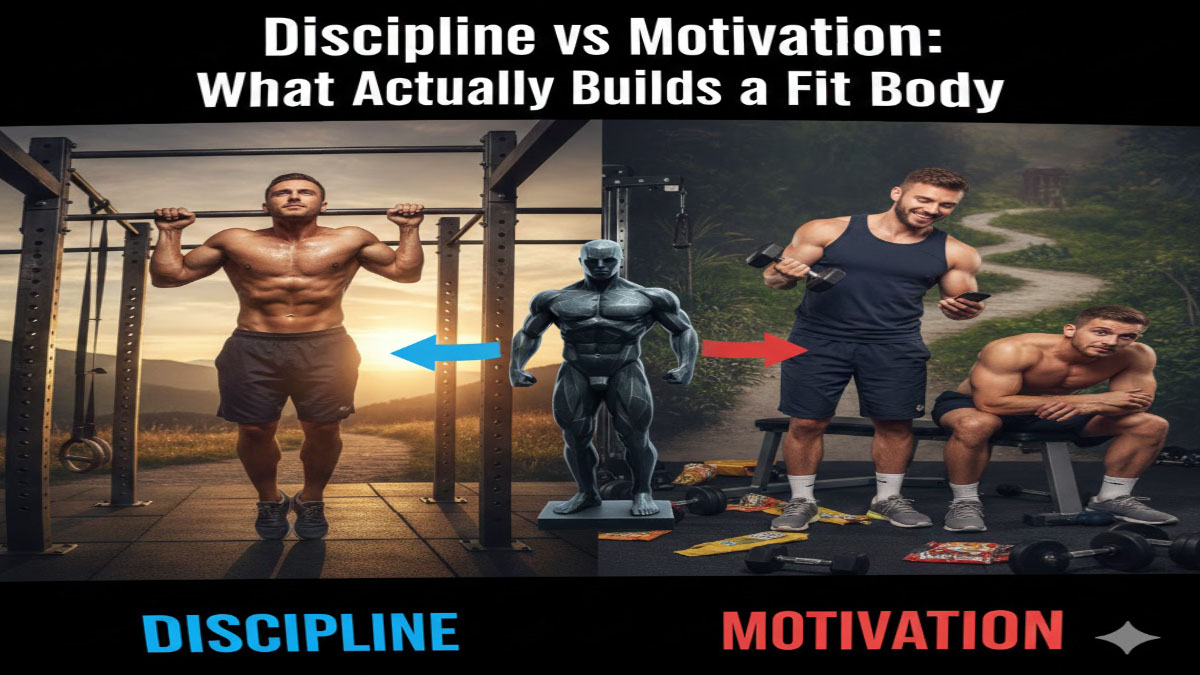
The Great Debate
Motivation gets the credit. Discipline does the work. We romanticize the feeling of being "pumped" to work out, the inspirational videos, the New Year's resolution energy. But when the feeling fades — and it always does — what keeps you going?
In 2026, psychologists and behavioral scientists have a clear answer: discipline, not motivation, builds fit bodies. But the relationship is more nuanced than a simple "discipline good, motivation bad" binary. Here's what the research actually says.
The 2026 Consensus
Key finding: Motivation is emotional and temporary. Discipline is behavioral and trainable. Long-term success comes from systems that don't require motivation to function.
Discipline vs Motivation: Head-to-Head
Motivation
The emotional drive to act. "I feel like working out today."
- Gets you started
- Feels great when present
- Unreliable — comes and goes
- Dependent on mood, energy, circumstances
- Fades when results are slow
- Can't be forced
Discipline
The ability to act regardless of feelings. "I work out because it's scheduled."
- Keeps you going when motivation fades
- Reliable — not dependent on feelings
- Buildable like a muscle
- Creates habits that become automatic
- Carries you through plateaus
- Harder to start (but gets easier)
The Real Relationship: Motivation Starts, Discipline Finishes
How They Work Together
- Motivation is the spark that gets you started — the New Year's resolution, the desire to change, the inspiration from others.
- Discipline is the engine that keeps you going when the spark is gone — through bad days, slow progress, and competing priorities.
The Balance
You need motivation to begin. But you cannot rely on it to continue. The goal is to use motivation to start, then build systems that make discipline automatic.
The 3 Phases of Fitness Journey
Phase 1: Motivation
Weeks 1-4 — High motivation, excitement, rapid progress. This is where you start. Use this energy to build initial habits.
Phase 2: The Grind
Weeks 5-12 — Motivation fades, progress slows. This is where discipline must take over. Most people quit here.
Phase 3: Automatic
3+ months — Habits are formed. Exercise becomes part of your identity. It requires minimal willpower.
Common Myths About Discipline and Motivation
Myth: "You just need more motivation"
Truth: Motivation is not a resource you can summon at will. It's an emotion. You can't "get motivated" any more than you can "get happy" on command.
Myth: "Disciplined people never struggle"
Truth: Disciplined people don't want to work out either. They just have systems that override their feelings.
Myth: "Motivation is useless"
Truth: Motivation is the spark. It's valuable for starting. The problem is relying on it for the long haul.
Myth: "You're either born disciplined or not"
Truth: Discipline is a skill, not a trait. It can be built like a muscle, with practice and the right strategies.
How to Build Discipline (Without Suffering)
1. Start Small
Commit to 10 minutes. Or just putting on gym clothes. Small wins build confidence and reduce resistance. You can always do more once started.
2. Schedule It
Remove the decision. "I work out at 6 PM Monday/Wednesday/Friday." Non-negotiable appointments with yourself.
3. Stack Habits
Attach exercise to an existing habit. "After I brush my teeth in the morning, I do 10 push-ups." "After I finish work, I change into gym clothes."
4. Reduce Friction
Lay out clothes the night before. Pack your gym bag. Make it as easy as possible to start.
5. Find Enjoyment
Discipline is easier when you don't hate the activity. Find movement you actually enjoy — even if it's just walking.
6. Get Accountability
Workout buddy, trainer, coach, app. External accountability supplements internal discipline.
7. Use the 5-Minute Rule
Commit to just 5 minutes. After 5 minutes, you can stop if you really want. Usually, you'll keep going.
8. Separate Feelings from Actions
"I don't feel like it" is irrelevant. Do it anyway. Feelings follow actions, not the other way around.
Powerful Mindset Shifts
From "I have to" to "I choose to"
You're choosing to exercise because of what it gives you. This is empowerment, not obligation.
From Outcome to Identity
"I'm the kind of person who exercises." Not "I'm trying to lose weight." Identity drives behavior.
From Punishment to Self-Care
Exercise isn't punishment for what you ate. It's self-respect. It's investing in your future self.
From Perfect to Consistent
Missed workout? Doesn't matter. Get the next one. Perfection is the enemy of consistency.
When Motivation Actually Helps
Use Motivation Strategically
- Starting a new habit: Use that initial spark to build momentum.
- Breaking a plateau: A new program, challenge, or goal can re-energize you.
- Community events: Races, classes, group challenges — external motivation works.
- Remembering your "why": Connect with your deeper reasons when discipline wavers.
Real Talk: Even Disciplined People Don't Want To
The Truth About Discipline
Disciplined people aren't immune to laziness, tiredness, or lack of motivation. They feel the same resistance you do. The difference is they have a system that overrides the feeling.
They've built habits so strong that "not working out" feels wrong. They've automated the decision so they don't have to rely on willpower. And they've practiced acting despite feelings so many times that it's become second nature.
Real-World Examples
The Morning Exerciser
Doesn't wake up excited. Just has a rule: "Feet on floor, into gym clothes, out the door." Doesn't negotiate with feelings.
The Consistent Lifter
Has trained for years. Doesn't think about motivation. Just shows up at scheduled times. It's what they do.
The Daily Walker
Walks every evening after dinner. Doesn't consider skipping. It's just part of the routine, like brushing teeth.
The Class Regular
Books classes in advance. Feels accountable to the instructor and the group. Shows up because others expect them.
The Discipline Trap: When It Backfires
All-or-Nothing Thinking
"I must work out every day or I'm weak." This leads to burnout and quitting. Discipline includes rest.
Ignoring Body Signals
"Pushing through" pain or illness isn't discipline — it's stupidity. Discipline includes knowing when to rest.
Rigid Rules
If you miss a workout, you haven't failed. You just adjust. Flexibility is part of sustainable discipline.
The Verdict: What Actually Builds a Fit Body
Key Takeaways from 2026 Research
- Motivation starts the journey; discipline finishes it.
- Discipline is a skill, not a personality trait. You can build it.
- Systems beat willpower. Schedule, reduce friction, stack habits.
- Separate feelings from actions. Do it anyway.
- Start small. Discipline is built through consistent small wins.
- Identity matters. See yourself as someone who exercises.
The Bottom Line
The 2026 research is clear: motivation is temporary; discipline is enduring. If you wait until you feel motivated, you'll never be consistent. The people with fit bodies aren't more motivated than you — they've just built systems that don't require motivation.
You can build discipline. Start small. Schedule it. Reduce friction. And remember: feelings are irrelevant. What matters is what you do. Do it enough times, and it becomes who you are.
Your Discipline Starter Kit
- ✅ Start with 2-3 sessions weekly, not 6
- ✅ Schedule them in your calendar
- ✅ Prepare everything the night before
- ✅ Use the 5-minute rule
- ✅ Find an accountability partner
- ✅ Remember: Feelings don't matter. Action does.