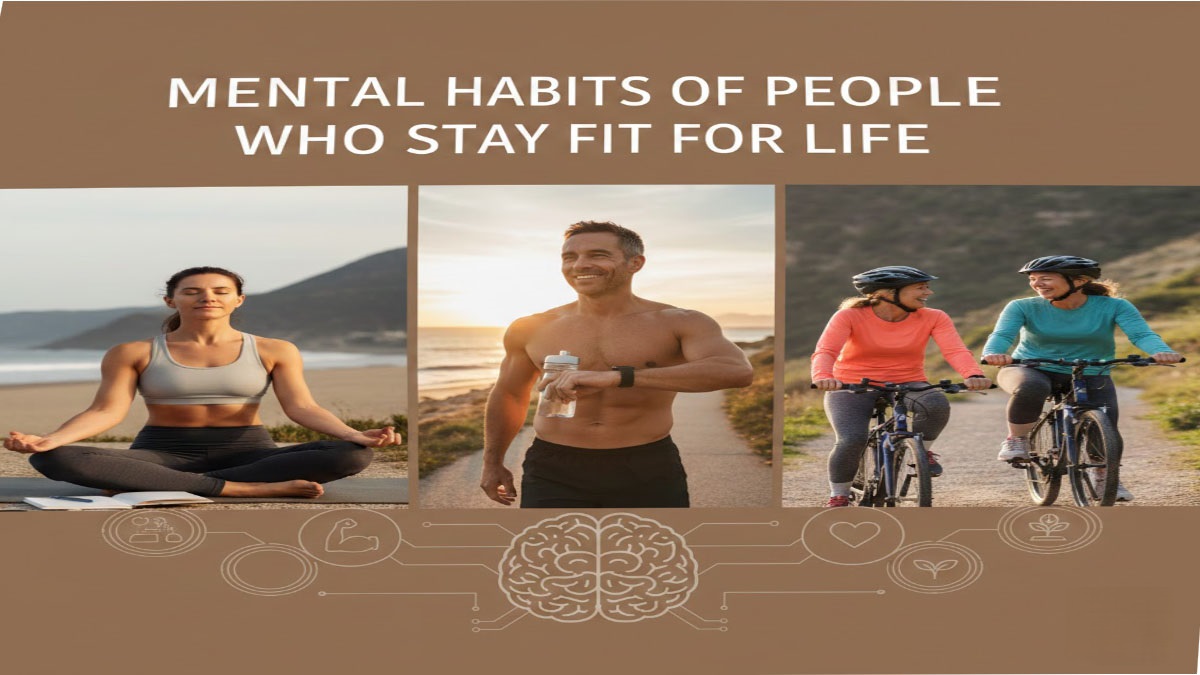
The Secret to Lifetime Fitness
What separates people who are fit at 20, 40, 60, and 80 from those who start and stop repeatedly? It's not better genetics, more willpower, or more free time. It's mental habits — the way they think about exercise, food, and themselves.
In 2026, psychologists studying long-term fitness success have identified clear patterns. These aren't personality traits you're born with. They're habits of mind that can be learned and cultivated. Here's what the research reveals.
The 2026 Long-Term Study
Key finding: People who maintain fitness for decades don't rely on motivation. They've built mental frameworks that make consistency automatic. Their thoughts about exercise are fundamentally different from those who quit.
Mental Habit #1: Identity-Based Thinking
"I'm the kind of person who exercises"
Lifelong exercisers don't say "I'm trying to get fit." They say "I'm a runner," "I'm a gym person," "I'm someone who values health." Exercise is part of who they are, not something they do temporarily.
The shift: From outcome-based identity ("I want to lose weight") to identity-based ("I'm a healthy person"). Each workout reinforces the identity. Missing a day doesn't change who you are.
Mental Habit #2: Process Over Outcome
"Focus on showing up, not results"
People who stay fit focus on the process — showing up, doing the work, enjoying the movement. They know results come from consistency, not intensity. They don't get discouraged by slow progress because they're not attached to quick outcomes.
The shift: From outcome goals ("lose 5kg") to process goals ("work out 3x this week"). Process goals are in your control and build consistency.
Mental Habit #3: Flexible Consistency
"Perfect is impossible; consistent is enough"
Lifelong exercisers miss workouts. They have periods of less activity. They eat "unhealthy" foods. The difference? They don't let one miss become two. They don't let one bad meal derail them. They get back on track immediately.
The shift: From all-or-nothing thinking to flexible consistency. One missed workout doesn't matter. What matters is what you do most of the time.
Mental Habit #4: Intrinsic Motivation
"I exercise because I enjoy it"
People who stick with fitness long-term have found activities they genuinely enjoy. They're not forcing themselves through workouts they hate. They've experimented until they found movement that feels good — whether it's hiking, swimming, yoga, dancing, or lifting.
The shift: From exercise as punishment or obligation to exercise as self-care and enjoyment. If you hate your workouts, you won't do them for 40 years.
Mental Habit #5: Self-Compassion, Not Self-Criticism
"I'm human. I'll do better next time."
When they slip, lifelong exercisers don't beat themselves up. They don't engage in shame spirals. They acknowledge the slip, learn from it, and move on. Self-compassion leads to faster recovery than self-criticism.
The shift: From shame and guilt to self-compassion. One bad day doesn't define you. What matters is what you do next.
Mental Habit #6: Long-Term Perspective
"This is for the rest of my life"
People who stay fit don't go on "diets" or "programs" with end dates. They've accepted that healthy habits are permanent. This perspective makes short-term sacrifices easier because they're not temporary.
The shift: From short-term fixes to lifelong habits. This isn't a 12-week challenge. This is how you live now.
Mental Habit #7: Separating Feelings from Actions
"I don't have to want to do it. I just have to do it."
Lifelong exercisers don't wait to feel motivated. They understand that feelings are irrelevant. They've built systems and habits that override temporary emotions. They work out on days they feel like it and days they don't.
The shift: From "I'll do it when I feel like it" to "I do it regardless of feelings." Feelings follow actions.
Mental Habit #8: Non-Negotiable Scheduling
"Exercise is on the calendar, not optional"
For lifelong exercisers, workouts are non-negotiable appointments. They're scheduled like meetings with the most important person in their life — themselves. They don't decide daily whether to exercise; they've already decided.
The shift: From deciding each day to scheduling in advance. Remove the daily decision.
Mental Habit #9: Focusing on How It Feels
"I remember how good I feel after"
People who stay fit have trained themselves to focus on the positive feelings after exercise — the endorphin rush, the sense of accomplishment, the stress relief. They use this anticipation to get through moments of resistance.
The shift: From dreading the effort to anticipating the reward. Focus on the after, not the during.
Mental Habit #10: Community and Connection
"I have people who expect me there"
Lifelong exercisers often have community — workout buddies, class friends, running groups, online communities. They show up for others when they wouldn't show up for themselves. Accountability and connection sustain them.
The shift: From solo struggle to community support. Find your people.
The Fit Mind vs The Quitter Mind
Fit Mind
- "I'm a healthy person"
- "I focus on showing up"
- "One miss doesn't matter"
- "I enjoy moving my body"
- "I'll do better next time"
- "This is for life"
- "Feelings are irrelevant"
Quitter Mind
- "I'm trying to lose weight"
- "I focus on results"
- "I missed one, week is ruined"
- "I hate working out"
- "I'm so bad, I give up"
- "I need to lose 10kg by summer"
- "I'll do it when I feel like it"
The 5 Core Principles of Lifelong Fitness
Identity
See yourself as someone who exercises. It's who you are, not what you do.
Process
Focus on showing up, not results. Results are a byproduct of consistency.
Flexibility
Perfect is impossible. Consistent is enough. Never miss twice.
Enjoyment
Find movement you love. If you hate it, you won't do it for 40 years.
Self-Compassion
Slip-ups happen. Forgive, learn, move on. Guilt doesn't help.
How to Cultivate These Mental Habits
1. Change Your Self-Talk
Instead of "I'm trying to exercise," say "I'm an exerciser." Instead of "I can't eat that," say "I don't eat that." Identity-based language shapes behavior.
2. Set Process Goals
Weekly: "I will work out 3 times." Not "I will lose 2kg." Process goals are in your control and build consistency.
3. Schedule Non-Negotiably
Put workouts in your calendar. Treat them as appointments you can't miss.
4. Experiment With Activities
Try different things until you find what you enjoy. Walking counts. Hiking counts. Dancing counts.
5. Find Your Community
Group classes, workout buddy, online forum. Accountability and connection matter.
6. Practice the 5-Minute Rule
Commit to 5 minutes. After 5, you can stop. Usually you'll keep going.
7. Separate Feelings from Actions
"I don't feel like it" is irrelevant. Do it anyway. Feelings follow action.
8. Practice Self-Compassion
Missed workout? Forgive yourself. One miss doesn't matter. Get the next one.
The Verdict: Mindset Is Everything
Key Takeaways from 2026 Research
- Identity: See yourself as someone who exercises
- Process: Focus on showing up, not results
- Flexibility: Perfect is impossible; consistent is enough
- Enjoyment: Find movement you actually love
- Self-compassion: Slip-ups don't define you
- Community: Connect with others
- Long-term: This is for life, not a quick fix
The Bottom Line
The 2026 research is clear: people who stay fit for life think differently than those who don't. They've built mental habits that make consistency automatic. They don't rely on motivation, don't demand perfection, and don't let slip-ups derail them.
The good news? These aren't personality traits you're born with. They're skills you can develop. Start with identity. Shift your self-talk. Find movement you enjoy. Focus on showing up. Forgive yourself when you miss. And remember — this is for the rest of your life.
Your 30-Day Mental Habit Challenge
- ✅ Week 1: Practice identity language — "I'm someone who exercises"
- ✅ Week 2: Set process goals — 3 workouts, not outcome goals
- ✅ Week 3: Try one new activity you might enjoy
- ✅ Week 4: When you slip, practice self-compassion, not guilt
- ✅ Remember: This is for life. One month is just the beginning.