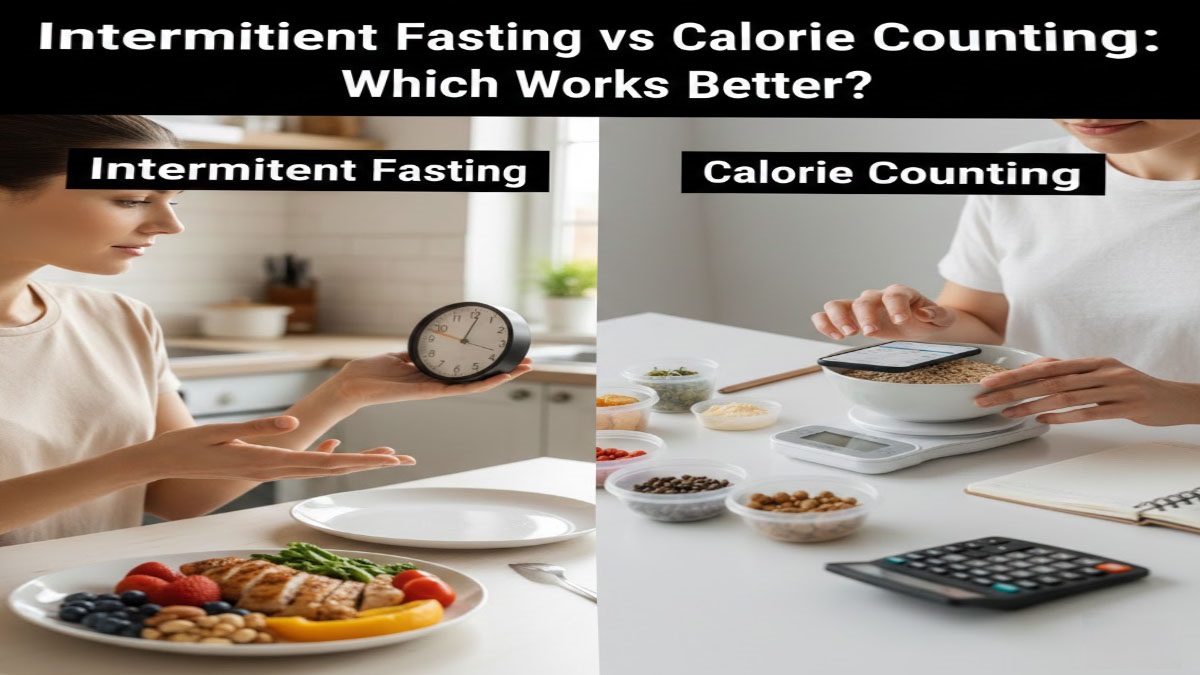
The Great Diet Debate
Two of the most popular weight loss approaches — intermittent fasting and calorie counting — often seem at odds. Fasting advocates say you don't need to count, just restrict eating windows. Calorie counters insist that energy balance is all that matters. So which is right?
In 2026, a wave of new research has compared these approaches head-to-head. The results are clear: both work, but for different people and for different reasons. Here's what the science says about which method is better — and how to choose.
The 2026 Research
Key finding: Both intermittent fasting and calorie counting produce weight loss by creating a calorie deficit. Neither is inherently superior. The best method is the one you can stick with consistently.
Head-to-Head Comparison
Intermittent Fasting
Alternating periods of eating and fasting. Most common: 16:8 (fast 16h, eat 8h).
Best for: People who prefer simple rules, skip breakfast easily, want metabolic benefits.
Calorie Counting
Tracking daily food intake to maintain a calorie deficit. Apps like MyFitnessPal, Cronometer.
Best for: People who want flexibility, enjoy data/tracking, need precise control.
What 2026 Research Reveals
12-Week RCT: IF vs Daily Calorie Restriction
Key finding: Both groups lost similar weight (6-8 kg). No significant difference in fat loss, muscle preservation, or metabolic markers. Adherence was slightly higher in IF group.
6-Month Study: Time-Restricted Eating
Key finding: IF group lost 4.5 kg vs 4.2 kg in calorie counting group (not statistically significant). Both improved blood pressure and insulin sensitivity.
Meta-Analysis (23 Studies)
Key finding: No significant difference in weight loss between IF and continuous calorie restriction. Calorie deficit, not fasting window, drives results.
How They Work: The Science
Intermittent Fasting
IF works primarily by reducing eating window, which naturally reduces calorie intake. Most people eat fewer meals and snacks, creating an automatic deficit without counting.
Secondary benefits: May improve insulin sensitivity, increase autophagy (cellular cleanup), and align with circadian rhythms.
Calorie Counting
CC works by creating awareness of intake, allowing precise control over deficit. You can eat any foods as long as you stay within budget.
Secondary benefits: Teaches portion awareness, food composition knowledge, and can be fine-tuned for plateaus.
The Common Mechanism
Both methods create a calorie deficit. IF does it by limiting time; CC does it by limiting quantity. Neither has metabolic magic — the deficit drives weight loss.
Pros and Cons
IF Pros
- Simple rules (eat within window)
- No tracking or math required
- May reduce decision fatigue
- Can fit natural appetite patterns
- Potential autophagy benefits
- Often improves insulin sensitivity
IF Cons
- May overeat in eating window
- Social challenges (dinners, events)
- Hunger during adaptation period
- Not suitable for some (diabetes, pregnancy)
- Can trigger binge-restrict cycles
Calorie Counting Pros
- Precise control over intake
- Maximum food flexibility
- Teaches portion awareness
- Works with any eating schedule
- Easy to adjust for plateaus
- Data for optimization
Calorie Counting Cons
- Time-consuming to track
- Can become obsessive
- Estimates are often inaccurate
- Restaurant meals difficult
- May ignore food quality
- Burnout common
Metabolic Differences: What IF Offers Beyond Calories
Insulin Sensitivity
Multiple studies show IF improves insulin sensitivity independent of weight loss. Fasting periods lower baseline insulin, which may help with fat burning and metabolic health.
Autophagy
Fasting triggers autophagy — cellular cleanup that removes damaged components. This may have anti-aging and disease-prevention benefits, though human research is still emerging.
Circadian Alignment
Eating earlier in the day (early time-restricted feeding) aligns with circadian rhythms, potentially improving metabolism. Late-night eating may be detrimental regardless of calories.
Who Should Choose Which?
Choose IF If:
- You naturally skip breakfast
- You prefer simple rules over tracking
- You struggle with portion control
- You want potential metabolic benefits
- You have a consistent daily schedule
- Counting feels tedious
Choose Calorie Counting If:
- You like data and tracking
- You need precise control
- Your schedule varies day to day
- You want to learn portion sizes
- You're hitting a weight loss plateau
- You enjoy food flexibility
Practical Advice: Making Either Work
IF Success Tips
- Start with 12:12, progress to 16:8
- Stay hydrated during fast (water, black coffee)
- Break fast with protein + veggies
- Don't binge in eating window
- Eat nutrient-dense foods
- Allow 2-4 weeks adaptation
Calorie Counting Tips
- Use apps (MyFitnessPal, Cronometer)
- Weigh food for accuracy
- Focus on whole foods
- Aim for 500-calorie daily deficit
- Prioritize protein (1.6g/kg)
- Don't eat back exercise calories
The Best of Both Worlds
The Hybrid Approach
Many successful dieters combine elements:
- Use IF to naturally limit eating window
- Do rough calorie awareness (not strict tracking)
- Focus on protein and vegetables
- Track a few days to calibrate portions
- Adjust based on hunger and results
The "Lazy" Method
Research shows that simply being aware of calorie density and eating mostly whole foods, combined with reasonable eating windows, works for many without strict rules. The key is consistency, not perfection.
Common Mistakes With Each Method
IF Mistakes
- Overeating in window (compensating)
- Choosing junk food in window
- Skipping protein
- Not drinking enough water
- Starting with too long a fast
Calorie Counting Mistakes
- Inaccurate tracking (guesstimates)
- Ignoring food quality (only calories)
- Undereating (too aggressive)
- Obsessive behavior
- Not adjusting as weight changes
Who Should Avoid These Methods?
IF Not Recommended For:
- Pregnant/breastfeeding women
- Type 1 diabetics
- Those with eating disorder history
- Underweight individuals
- Athletes needing precise fueling
Calorie Counting Caution For:
- Those with eating disorder history
- People prone to obsession
- Children/adolescents
- Pregnancy (with doctor guidance)
Common Myths Debunked
Myth: "IF puts you in starvation mode"
Truth: Metabolism doesn't slow significantly until prolonged severe restriction. IF doesn't cause starvation mode.
Myth: "Calorie counting is always accurate"
Truth: Food labels have 20% error margin. Tracking is a guide, not perfect science.
Myth: "IF burns more fat than calorie deficit"
Truth: When calories matched, fat loss is identical between IF and regular eating.
Myth: "You must count calories to lose weight"
Truth: Many lose weight with IF, low-carb, or intuitive eating without counting.
The Verdict: Which Works Better?
Key Takeaways from 2026 Research
- Both work: IF and calorie counting produce similar weight loss when followed consistently
- Calorie deficit drives results: Neither has metabolic magic beyond creating deficit
- IF benefits: Simpler rules, potential insulin sensitivity, autophagy
- Calorie counting benefits: Precision, flexibility, education
- Adherence is key: The best method is the one you'll stick with
- Combine approaches: Use IF for structure, rough calorie awareness for control
The Bottom Line
The 2026 research is clear: there is no "winner" between intermittent fasting and calorie counting. Both produce weight loss by creating a calorie deficit. The choice comes down to personal preference, lifestyle, and what you can sustain.
IF offers simplicity and potential metabolic benefits. Calorie counting offers precision and flexibility. Neither is wrong. Try one for 4 weeks. If it feels sustainable, continue. If not, try the other. The best diet is the one you can stick with.
Quick Decision Guide
- ✅ Prefer simple rules? → Try IF
- ✅ Like data and control? → Try calorie counting
- ✅ Want both? → Combine IF + rough calorie awareness
- ✅ Not sure? → Try IF for 2 weeks, then calorie count for 2 weeks
- ⚠️ History of disordered eating? → Avoid both, work with professional