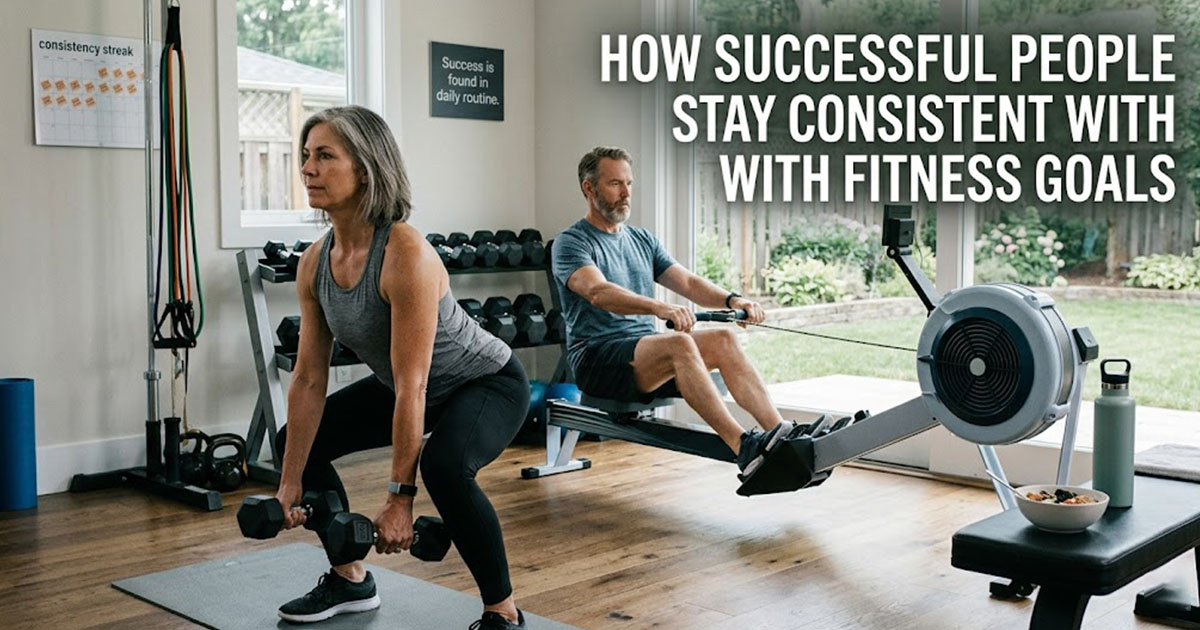
The Consistency Paradox
What separates people who stay fit for decades from those who start and stop repeatedly? Is it genetics? Willpower? More free time? When you look at the habits of highly successful people—elite athletes, CEOs, world-class performers—a clear pattern emerges.
They don't rely on motivation. They don't chase perfection. They've built systems, mindsets, and rituals that make consistency automatic. In 2026, research into high achievers reveals that the secret to lifelong fitness isn't about working harder—it's about designing an approach that removes the need for constant willpower .
This article synthesizes the wisdom of Olympic champions, bodybuilding legends, and successful executives to reveal exactly how you can build the kind of consistency that lasts.
The 2026 Research
Key finding: Successful people treat fitness as a system, not a goal. They focus on the "art of showing up" rather than chasing dramatic transformations. Consistency is built through identity, environment, and repeatable rituals—not willpower .
What Elite Performers Teach Us About Consistency
Frank Zane
At 83, Frank Zane remains one of the most iconic physiques in bodybuilding history. His secret? "Every step forward, no matter how small, counts towards your journey. Consistency is key, and showing up for yourself is already an achievement."
Zane recommends journaling small wins and giving yourself "stars" for each achievement. Over time, these stars become a powerful reminder of what you're capable of .
Ruth Croft
For elite trail runner Ruth Croft, consistency isn't about perfect weeks or flawless training blocks. It's about showing up regularly and building momentum without forcing things .
Croft emphasizes that some weeks feel light while others feel heavy. What matters is maintaining rhythm and avoiding sharp swings in volume or intensity that can derail progress or lead to injury. "The goal is to be able to train again tomorrow," she says. "That matters more than one standout session" .
Helen Glover
When asked about her top fitness tip for 2026, Glover shared a perspective that applies to everyone, not just elite athletes .
Glover also emphasizes the importance of rest: "I'm brilliant at pushing myself, but often less good at slowing down. In 2026, I want to be intentional about sleep, stretching, and taking rest without guilt—because that's when the real adaptation happens" .
Eva Longoria
As Eva Longoria approaches 50, she's become a vocal advocate for "biological consistency"—rejecting novelty in favor of boring, repeatable habits that are sustainable .
Longoria's non-negotiable habit is daily walking. When traveling or on set for 14-hour days, she prioritizes walking over intense gym sessions because it requires no equipment and no recovery window. This "low-barrier" approach ensures her activity levels never drop to zero .
Kieran Reilly
Reilly also warns against maxing out every session: "There are sessions for intensity and sessions where you just need to get into the gym, they each have their own place!"
Barry McGuigan
McGuigan's advice for 2026 focuses on building a complete foundation: aerobic fitness daily, strength training 2-3 times weekly, proper hydration (one litre per 25kg of body weight), and eliminating processed foods .
The 7 Core Principles of Successful People
1. Identity-Based Habits
Instead of thinking "I need to get in shape," successful people think "I'm someone who moves regularly." Each workout becomes proof of that identity—not a test you can fail .
2. The Smallest Version of Consistency
Helen Glover's "smallest version of consistency" is echoed by every elite performer. When life gets busy, they don't skip—they scale down. A 10-minute walk, a quick mobility routine, a short session keeps the habit alive .
3. Rituals Over Resolutions
Motivation is a feeling that fluctuates, but a ritual is a structure that holds you up when motivation runs low. Successful people build rituals by tying exercise to existing habits .
4. Tracking Process, Not Outcomes
Frank Zane tracks "stars" for small wins, not just scale victories. Ruth Croft uses data to confirm what she's sensing, not to judge herself. Successful people measure what they can control .
5. Recovery as Performance Enhancement
Eva Longoria calls sleep the "foundation of performance." Helen Glover is intentional about rest without guilt. Ruth Croft says recovery is what allows the work to stick .
6. Flexibility and Self-Compassion
Successful people don't let one missed workout derail them. They understand that lapses are normal and that the ability to restart is a skill, not a weakness .
7. Patience and Long-Term Perspective
Kieran Reilly's best advice: "Patience—each session may not seem important but they add up to amazing progress" .
Success Mindset vs. Failure Mindset
Success Mindset
- "I'm someone who moves regularly"
- "Small wins count"
- "Scale down when busy, don't skip"
- "Recovery is part of the work"
- "Progress is built through repetition"
- "Flexible and adaptable"
Failure Mindset
- "I'm trying to get in shape"
- "Only perfect workouts count"
- "If I can't do full workout, do nothing"
- "Rest is lazy"
- "Progress must be visible daily"
- "All-or-nothing thinking"
What 2026 Research Reveals
The 42% Advantage
Biohacker Bryan Johnson's 2026 research shows that the right combination of training can lower your risk of death by up to 42%. The key is consistency: 6 weekly sessions (3 strength, 3 cardio) with 150 minutes moderate and 75 minutes vigorous cardio .
Habit Formation Study
Research on behavior change shows that lapses are a normal part of habit-building—not a lack of willpower. What matters isn't how many times you pause, but how you choose to begin again .
Fresh Start Effect
Psychologists call this the "fresh start effect." New beginnings—a Monday, a new month, or even a single reset workout—create a mental clean slate that boosts motivation and follow-through .
Consistency Beats Intensity
Research shows that moderate, repeatable effort leads to better long-term results than pushing too hard and burning out. When restarting, smaller really is better: shorter workouts, lighter resistance, fewer weekly sessions .
Environmental Psychology
Research on environmental psychology confirms that our surroundings directly influence our habit formation. If your gym is crowded or loud, your brain will subconsciously resist going. Successful people optimize their environment .
The 3-Day Commitment
The CDC's physical activity guidelines recommend at least two days of muscle-strengthening work each week. Committing to three workouts a week keeps things manageable—enough to feel progress without turning fitness into something that drains your time or energy .
Practical Strategies for Lasting Consistency
1. Shift From "All or Nothing" to "Always Something"
Missing a workout or having an off week doesn't mean you've failed. In 2026, successful fitness plans are built around adaptability: short workouts, active rest days, or even a walk and some stretching still count .
2. Set Goals That Support Your Life
Instead of focusing only on outcomes like weight or appearance, set goals based on what you want to do and feel: more energy, feeling stronger in daily activities, reducing stress or improving sleep .
3. Build Routines Around Habits, Not Motivation
Link movement to things you already do: stretch while watching a show, walk or bike for short trips, do a quick workout at the same time each day. Small, repeatable actions add up and make fitness feel automatic rather than forced .
4. Prioritize Recovery and Mental Health
In 2026, fitness isn't just about how hard you train—it's also about how well you recover. Rest days, sleep, hydration, and stress management are essential parts of progress .
5. Revisit and Reset Your Goals Regularly
Life changes—and your fitness goals should be allowed to change too. Every few months, reflect on what's working and what isn't. Adjust your routine based on your schedule, interests, and energy levels .
6. Find a Gym Buddy or Trainer
Golfer Ian Poulter's top tip: "Find a gym buddy or a trainer and stay as regular as you possibly can" .
7. Master Hydration
Barry McGuigan recommends one litre per 25kg of body weight daily. Staying hydrated helps with digestion, cognitive function, and performance .
8. Focus on Nutrition Habits, Not Diet Rules
Strict diet rules are hard to follow for more than a few weeks. UC San Diego's research explains that strict dieting leaves people hungry and unsatisfied, and our bodies are biologically wired to overcompensate after periods of restriction .
9. Make Daily Walking Non-Negotiable
Eva Longoria treats walking as a tool for stress regulation and mental clarity. Because it requires no equipment and no recovery window, it's the most reliable way to ensure movement every day .
10. Use Data, Not Guesswork
Resolutions often fail because they are vague. Success requires clarity. Use a journal, app, or tracker to monitor progress .
The 2026 Weekly Consistency Blueprint
Based on Expert Recommendations
- Strength Training 2-3 sessions weekly
- Cardio (Moderate) 150 minutes weekly
- Cardio (Vigorous) 75 minutes weekly
- Daily Walking 20-30 minutes, non-negotiable
- Recovery Days 1-2 full rest days
- Mobility/Flexibility 2-3 sessions weekly
The Key: Start Smaller Than You Think
The goal of your first week back isn't progress—it's showing up . A 10-15 minute session, a beginner or recovery ride, one strength session and one cardio session—these choices lower the barrier to entry and rebuild confidence .
Overcoming Setbacks: The Skill of Restarting
Why Beginning Again Feels Hard (And Why It's Normal)
Behaviour change is rarely a straight line. Most people cycle through starting, stopping and restarting before habits truly stick. Psychologists consistently show that lapses are a normal part of habit-building—not a lack of willpower .
What matters isn't how many times you pause. It's how you choose to begin again .
The Fresh Start Effect
Don't wait for the perfect moment. Create one. Your next workout is the fresh start. New beginnings—a Monday, a new month, or even a single reset workout—create a mental clean slate that boosts motivation .
Environment Design: Make Consistency Inevitable
Remove Barriers, Don't Rely on Willpower
Motivation comes and goes. Your environment matters more. At-home fitness removes common restart blockers: no commute, no crowded classes, no pressure to "keep up." The easier it is to start, the more likely you are to continue .
Create a Sanctuary
If your gym is crowded or loud, your brain will subconsciously resist going. Train in a space filled with natural light, which is proven to enhance mood and circadian rhythm .
SMART Goals: The Functional Medicine Approach
Setting Goals That Actually Work
- Specific: Clear and simple (not "eat better," but "add protein to breakfast")
- Measurable: You can track it (days per week, servings, minutes)
- Achievable: Realistic for your current capacity
- Relevant: Addresses a root cause—blood sugar, hormones, digestion, energy
- Time-bound: Has a gentle container (7 days, 2 weeks, 30 days)
Functional medicine twist: If a goal increases stress, it's not supportive. The best goals empower you, promote health, and create consistency .
The Verdict: Consistency Is a Skill You Can Build
Key Takeaways from 2026 Research
- Successful people treat fitness as a system: They build rituals, not resolutions
- The smallest version of consistency wins: 10-minute walks count
- Identity matters: "I'm someone who moves regularly" beats "I need to get in shape"
- Recovery is part of the work: Sleep and rest are non-negotiable
- Flexibility prevents quitting: All-or-nothing thinking is the enemy of consistency
- Patience pays: Each session may not seem important, but they add up to amazing progress
The Bottom Line
The 2026 research is clear: successful people don't have more willpower than you. They've simply designed their approach around human psychology rather than fighting it. They start small, they forgive setbacks, they build identity-based habits, and they prioritize recovery as much as training .
As Frank Zane said: "Don't give up. You're stronger and more capable than you think. Let's celebrate every victory, big or small" .
Your 30-Day Consistency Challenge
- ✅ Week 1: 3 workouts, any length (celebrate showing up)
- ✅ Week 2: 3 workouts + 2 short walks
- ✅ Week 3: Add 5 minutes to each workout
- ✅ Week 4: Journal your "small wins" each day
- ✅ Remember: Progress isn't always measured in the mirror—it's the daily choices and efforts you make