Recovery Is Where Results Happen
Most people obsess over their workout—the weights they lifted, the miles they ran, the calories they burned. But elite trainers know a secret that separates those who progress from those who plateau: what you do after your workout matters as much as the workout itself .
Jason Pullara, Director of Strength & Conditioning at Purdue University, explains: "Recovery should not be viewed as passive, optional, or reactive, but as an active component of training that directly influences performance outcomes" .
In 2026, the science of recovery has evolved dramatically. A comprehensive meta-analysis published in Frontiers in Physiology evaluated 17 different recovery interventions and ranked their effectiveness for specific outcomes . Meanwhile, new research on polyphenols, sleep optimization, and nervous system regulation has transformed how trainers approach post-workout recovery .
This article synthesizes the latest research and the wisdom of elite trainers to give you the definitive post-workout recovery routine—one that will accelerate your results, prevent burnout, and keep you training consistently for years to come.
The 2026 Research
Key finding: Recovery should follow a hierarchical "recovery pyramid." Sleep, nutrition, and hydration form the foundation—accounting for the majority of recovery potential. Advanced modalities (cold therapy, compression, massage) provide incremental benefits only when the foundation is solid .
The Recovery Pyramid: Trainers' #1 Framework
At Purdue University, Pullara's team organizes recovery around three guiding principles: building up the recovery pyramid, being specific with the type of recovery required, and periodizing recovery across the training year .
🔹 Base: Sleep, Nutrition & Hydration
These factors account for the majority of recovery potential and must be consistently addressed before additional recovery strategies are layered on top . Without this foundation, other modalities provide limited benefit .
🔸 Middle: Active Recovery & Mobility
Light movement, Zone 2 cardio, stretching, and foam rolling. These methods support circulation and reduce stiffness without adding fatigue .
🔹 Top: Advanced Modalities
Cold water immersion, contrast therapy, compression, massage, and recovery tools. These provide incremental benefits but should never replace the foundation .
Trainers emphasize that recovery should be periodized—more intensive methods during competition phases, lighter approaches during general preparation .
Step 1: Nutrient Timing (The Foundation)
According to the iHerb recovery guide, "Proper refueling is the foundation of post-workout recovery. Training breaks down muscle tissue, depletes energy stores, and stresses the nervous system. Refueling is the first step back to health" .
Protein for Repair
Within one to two hours after training, aim for 25 to 40 grams of high-quality protein. This stimulates muscle protein synthesis and reduces breakdown .
Carbohydrates for Glycogen
Carbohydrates replenish glycogen stores. When glycogen is low, recovery slows, soreness increases, and subsequent performance suffers .
Protein Sources
- Whey or plant protein shake
- Eggs
- Greek yogurt
- Lean meat or chicken
Carbohydrate Sources
- Rice, potatoes, oats
- Fruit (bananas, berries)
- Sourdough bread
- Legumes and grains
The Polyphenol Breakthrough
A January 2026 study in Metabolites found that polyphenol-rich interventions accelerate metabolic normalization during recovery. Supplementation was associated with reduced accumulation of hypoxanthine, xanthine, and uric acid—markers of oxidative stress—and weakened correlations between purine metabolites and oxidative stress markers .
Practical application: Include polyphenol-rich foods like berries, tart cherries, and pomegranates in your post-workout nutrition .
Step 2: Hydration and Electrolytes
Hydration is frequently discussed but rarely executed optimally. Even mild dehydration negatively impacts strength, endurance, coordination, and cognitive performance .
The Hydration Protocol
- Drink enough water post-workout until urine returns to pale yellow
- Replace electrolytes (sodium, potassium, magnesium) lost through sweat
- Consider a sweat test to personalize electrolyte needs
This is the simplest and most effective recovery technique—and the most commonly overlooked .
Step 3: Sleep Optimization
Sleep is currently the most powerful recovery tool available. During deep sleep, growth hormone is released, tissue repair accelerates, and the nervous system recalibrates .
How Much Sleep Do You Need?
Most performance-focused individuals need 7 to 9 hours nightly, with more needed during high-volume training . Research published in the Journal of Clinical Sleep Medicine shows that extending sleep improves reaction time, accuracy, and mood in athletes .
Sleep Hygiene Strategies
- Consistent sleep and wake times
- Limit blue light exposure before bed
- Keep room cool (65-68°F)
- Consider magnesium glycinate before bed for muscle relaxation
- Use wearables to track sleep cycles
As the Evolve MMA guide states, "If you only adopt one recovery habit, this should be it" .
Step 4: Active Recovery and Mobility
Complete rest is not always the fastest path to recovery. Active recovery has gained stronger scientific backing in recent years .
Zone 2 Cardio Strong Evidence
Research from the Journal of Strength and Conditioning Research supports low-intensity aerobic work (Zone 2 cardio) for improving blood flow and clearing metabolic byproducts without adding stress .
Examples: Light cycling, slow shadowboxing, easy swimming, brisk walking
Duration: 20 to 40 minutes on rest days
Mobility & Tissue Work
Structured mobility—controlled articular rotations, loaded stretching, isometric holds at end range—improves joint range of motion without negatively affecting strength .
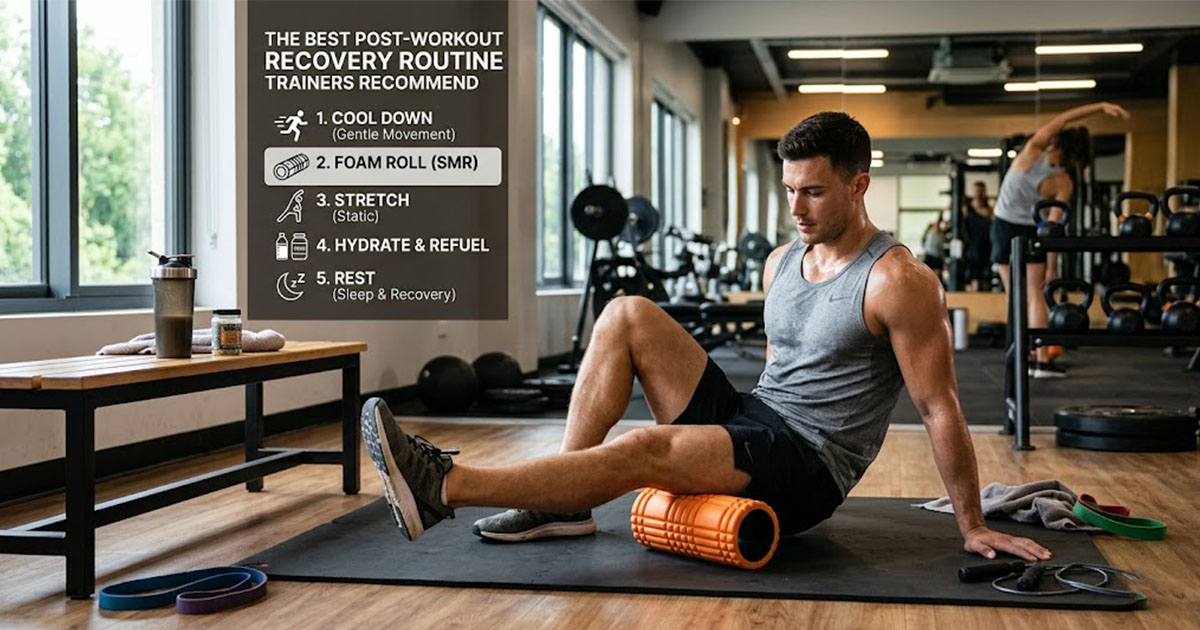
Foam rolling and myofascial release help ease tightness and support range of motion, especially in larger muscle groups .
The VASA Fitness Recommendation
After workouts, spend a few minutes stretching or foam rolling. A couple times per week, consider using a sauna, pool, or other recovery option. Daily: hydrate consistently and aim for solid sleep .
Step 5: Nervous System Regulation
One of the biggest shifts in recovery science is the focus on the nervous system. Training activates the sympathetic nervous system ("fight or flight"). Recovery requires shifting into parasympathetic dominance ("rest and digest") .
Breathwork Protocols
Studies in Frontiers in Human Neuroscience and Psychophysiology show that slow breathing techniques improve heart rate variability—a key marker of recovery readiness .
- Box breathing: 4 counts in, hold 4, out 4, hold 4
- 4-7-8 breathing: Inhale 4, hold 7, exhale 8
- Extended exhale breathing: Exhale longer than inhale
- Nasal-only recovery sessions
Just five to ten minutes of controlled breathing post-training can lower stress hormones and accelerate systemic recovery .
Step 6: Strategic Use of Advanced Modalities
Once the foundation is solid, trainers recommend selective use of advanced recovery tools. A 2026 network meta-analysis in Frontiers in Physiology ranked the effectiveness of 17 interventions .
Cold Water Immersion Context-Dependent
A 2023 meta-analysis found that cold water immersion can reduce DOMS and perceived fatigue after high-intensity sessions. However, recent research suggests that frequent cold exposure immediately after strength training may blunt muscle growth adaptations .
Smarter approach: Use cold immersion after competition or intense conditioning. Avoid immediate cold exposure after hypertrophy-focused training .
Massage Effective for Soreness
Portable cold compression therapy ranked #1 for reducing muscle soreness (SUCRA = 98.9%) in the network meta-analysis . Traditional massage also helps reduce delayed onset muscle soreness and improve flexibility .
Red Light Therapy & Compression
Far-infrared therapy was most effective for improving countermovement jump height (SUCRA = 98.3%). Intermittent negative pressure therapy produced the greatest reduction in creatine kinase levels (SUCRA = 91.0%) .
Contrast Therapy
Alternating hot and cold stimulates circulation and supports nervous system recovery without compromising long-term adaptation .
⚠️ Important: Modalities Are Supplementary
Advanced recovery tools should enhance—not replace—basic habits. Once nutrition, hydration, sleep, and active recovery are optimized, these methods can provide additional benefits .
The Recovery Timeline: What Happens When
Refuel window: 25-40g protein + quality carbs. Begin hydration. Start shifting nervous system with breathwork .
Complete meal: Whole food protein source, vegetables, complex carbs. Continue hydration .
Active recovery window: Light walking, mobility work, or gentle stretching if desired .
Deep recovery: 7-9 hours. Growth hormone release, tissue repair, nervous system reset .
Common Post-Workout Recovery Mistakes
Ignoring the Foundation
Using advanced modalities while neglecting sleep, nutrition, or hydration is like "putting premium tires on a car with no engine" .
Overdoing Cold Exposure
Frequent ice baths after strength training may blunt muscle growth adaptations .
Inconsistent Habits
Recovery requires consistency. Sporadic efforts yield sporadic results .
Ignoring Pain Signals
Persistent soreness or joint pain indicates recovery is insufficient. Address it before it becomes an injury .
The Complete Trainer-Recommended Routine
Your Post-Workout Recovery Protocol
- Immediately after (0-30 min): 25-40g protein + fast carbs (shake + banana)
- 5-10 min breathwork: Box breathing or 4-7-8 to shift to parasympathetic state
- 30-60 min after: Complete meal with whole food protein, veggies, complex carbs
- Within 2 hours: Hydrate until urine is pale yellow
- Optional (if sore): 20-40 min light walking or cycling (Zone 2)
- Before bed: Magnesium glycinate, cool room, consistent bedtime
- Sleep: 7-9 hours (non-negotiable)
Recovery Periodization
Off-season: Focus on foundational habits. Use modalities sparingly .
Pre-competition: More targeted recovery. Nutritional timing, sleep consistency, selective modality use .
In-season: Recovery as performance preservation. More frequent monitoring, tighter routines .
Post-competition: Regenerative phase. Address accumulated fatigue, restore physical and mental well-being .
The Verdict: Recovery Is Training
Key Takeaways from 2026 Research
- The recovery pyramid: Sleep, nutrition, and hydration form the foundation. Everything else builds on top .
- Nutrient timing matters: 25-40g protein within 1-2 hours, plus carbs for glycogen .
- Sleep is non-negotiable: 7-9 hours for optimal repair and hormone release .
- Active recovery works: Zone 2 cardio and mobility reduce stiffness without adding fatigue .
- Advanced modalities are supplemental: Use strategically based on your training phase and goals .
- Nervous system regulation: Breathwork shifts you into recovery mode .
The Bottom Line
The 2026 research is unequivocal: the best post-workout recovery routine is not complicated, trendy, or expensive. It is a structured, repeatable process that prioritizes the foundation first .
As Jason Pullara explains, "Recovery should not be viewed as passive, optional, or reactive, but as an active component of training that directly influences performance outcomes" .
When athletes understand how recovery connects to training quality, injury prevention, and competitive success, adherence improves. Over time, this creates a culture in which athletes take ownership of their recovery .
Your 7-Day Recovery Challenge
- ✅ Days 1-7: Track post-workout protein intake (aim for 25-40g)
- ✅ Days 1-7: Prioritize 7-9 hours sleep
- ✅ Days 3-7: Add 5 minutes breathwork post-training
- ✅ Day 5: Try one active recovery session (20 min walk)
- ✅ Day 7: Evaluate how you feel—better recovery = better results