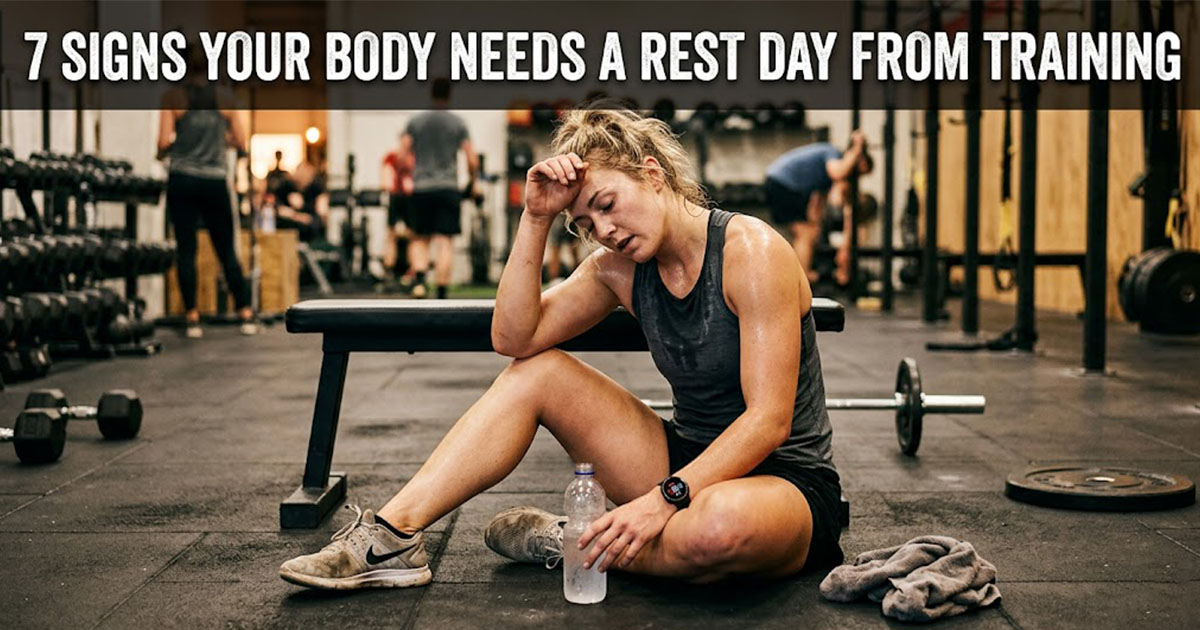
The Push-or-Rest Dilemma
You wake up feeling tired. Your muscles ache. The thought of going to the gym fills you with dread rather than anticipation. Should you push through and train anyway? Or is your body telling you something important?
This question haunts regular exercisers. Push through when you should rest and you risk injury, illness or burnout. Rest when you should push through and you sacrifice progress to momentary discomfort. The difference between productive persistence and destructive stubbornness is not always obvious. But with experience and attention, you can learn to read the signals your body sends .
In 2026, sports medicine experts emphasize that most people fall into one of two camps: those who need permission to rest, and those who need accountability to train. Knowing which tendency you have is the first step toward sustainable fitness .
The 2026 Research
Key finding: A study looking at 605 competitive athletes found the top signs of needing rest were general fatigue, unexplained drops in performance, and muscle aches that lasted too long. Other warning signs included moodiness, trouble sleeping, getting sick more often, and feeling stressed or down . Research shows that muscles need 48 to 72 hours to recover after a hard workout .
Understanding the Stages of Overtraining
Before diving into the signs, it's important to understand that there are three distinct stages of overtraining. Recognizing which stage you're in determines how long your recovery will take .
Higher perceived exertion, difficulty elevating heart rate past zone 2, slight irritability, decreased motivation. Recovery takes 7-14 days .
Same symptoms as stage 1, but lasting longer than two weeks. Subpar power, overall irritability, inability to complete workouts .
Complete lack of motivation to train, persistent fatigue lasting longer than a month. Symptoms can take months or years to fully resolve .
The goal is to catch the signs early, ideally during stage 1, before you spiral into prolonged recovery periods .
The 7 Signs Your Body Needs a Rest Day
Elevated Resting Heart Rate
Track your resting heart rate first thing in the morning before getting out of bed. After establishing your baseline over a few weeks, significant elevations suggest backing off training .
Persistent Muscle Soreness
If you are still significantly sore from your last session when the next one arrives, your recovery is not keeping pace with your training demands .
Disturbed Sleep
Poor sleep creates a vicious cycle: inadequate recovery leads to worse sleep, which further impairs recovery. Breaking this cycle sometimes requires reducing training temporarily .
Decreased Performance
Some performance variation is normal. But consistent decline across multiple sessions indicates insufficient recovery . Research shows that bench press performance drops significantly when people train the same muscle within 24 hours .
Increased Illness Frequency
If you are getting sick more often than usual, your training may be contributing to the problem rather than supporting health .
Mood Changes and Loss of Motivation
Dreading every single session for weeks on end is not normal. If the thought of training consistently fills you with genuine dread rather than mild reluctance, your relationship with exercise needs attention .
Joint Pain and Niggles
These niggles, if ignored, frequently progress to actual injuries. Taking them seriously and reducing load allows tissues to recover before minor issues become major ones .
Overtrained or Under-Recovered? The Critical Distinction
Sydney West Sports Medicine experts explain that under-recovery is far more common and often mislabelled as overtraining. Understanding the difference is crucial .
Overtraining
- Fatigue that does not resolve with rest
- Reduced performance output
- Ongoing muscle soreness or heaviness
- Poor sleep quality
- Relatively uncommon
Under-Recovery
- Frequent stiffness or tightness
- Reduced tolerance to familiar training loads
- Lingering or recurring minor aches
- Improves with rest, returns quickly
- Far more common
Why This Matters
Misidentifying under-recovery as overtraining can lead to unnecessary rest, reduced load tolerance, and delayed progress. Ignoring fatigue, on the other hand, increases the risk of recurrent injuries and altered movement patterns .
The Rest-or-Train Decision Guide
Apollo 24|7's expert guidelines provide a simple framework for making the right call .
Red Light: Rest Today
- Fever or below-the-neck illness
- Dizziness, faintness, chest pain
- Sharp or sudden pain
- Extreme sleep loss and safety concerns
- Multiple warning signs present
Yellow Light: Modify Your Session
- Mild cold symptoms without fever
- General soreness or stiffness
- Mental fatigue
- Poor sleep but adequate alertness
- Use the 10-minute warm-up test
Green Light: Go Ahead
- No red flags present
- Energy improves during warm-up
- Willing to adjust intensity as needed
- Normal training fatigue only
The 10-Minute Rule
Start your warm-up. If after 10 minutes you feel worse, stop and rest. If you feel better, continue at a gentle pace. This simple test helps distinguish between mental inertia and genuine physical exhaustion .
What to Do on Your Rest Day
Rest days don't mean doing nothing. In fact, active recovery can actually speed up the repair process .
Active Recovery
- Walking (30-45 minutes)
- Easy cycling
- Swimming at a gentle pace
- Yoga or light stretching
- Foam rolling
Mental Recovery
- Journaling (reduces amygdala activity)
- Forget you're an athlete for a day
- Progressive muscle relaxation
- Cyclic sighing breathing exercises
Nutrition on Rest Days
Don't cut calories on rest days. Your body uses rest days to repair and build muscle. This process needs fuel. Keep protein intake high (0.8-1g per pound of body weight) and eat enough total calories to support recovery .
Why Rest Days Are Non-Negotiable
FIU News reports that when engaging in any type of intense exercise, the working muscles start to break down, causing microtears in the muscle fibers. By giving your body a break with an active recovery day, the microtears begin to rebuild, and the feeling of soreness and pain will decrease. If your body doesn't get the break it needs, the microtears won't have the chance to heal, which can result in overtraining and can increase the likelihood of an injury .
The American Council on Exercise recommends at least one rest day every 7 to 10 days. Most experts say 2 to 3 rest days per week works best for building muscle and staying healthy .
The Consequences of Ignoring Rest
- Overtraining syndrome: Recovery can take weeks or even months. Some athletes need to stop training completely for 2 to 6 weeks to recover fully .
- Chronic inflammation: Leads to autoimmune issues, heart disease, and metabolic disorders .
- Hormonal disruption: Women may experience menstrual cycle irregularities or amenorrhea .
- Immunosuppression: More frequent infections and slower recovery from illness .
Don't Wait for Warning Signs: Schedule Rest Proactively
The best approach is to schedule rest before you need it. Here's how :
Schedule Deloads
- Reduce weights by 40-50% for one week
- Reduce total sets by half
- Maintain exercise selection and frequency
- Focus on movement quality
Use the 10% Rule
- Increase training volume by no more than 10% per week
- Never increase intensity, duration, and volume simultaneously
- This prevents sudden overload
Schedule deloads proactively every 4 to 8 weeks rather than waiting until accumulated fatigue forces rest .
The Verdict: Listen to Your Body
Key Takeaways from 2026 Research
- Rest days are training: Strength, endurance, and fitness improve after the workout, during recovery
- Seven warning signs: Elevated heart rate, persistent soreness, poor sleep, performance decline, frequent illness, mood changes, and joint pain
- Under-recovery is common: Most people are under-recovered, not overtrained
- Active recovery works: Walking, stretching, and light movement speed repair
- The 10-minute rule: If warming up makes you feel worse, stop
The Bottom Line
Learning to distinguish between normal training fatigue and genuine warning signs is a skill that grows with self-awareness. Your body sends signals—from mild stiffness to strong red flags—that help you decide wisely .
Pushing through the wrong type of fatigue can slow progress and risk injury, while gentle movement on lighter days can boost energy, mood, and consistency. By listening carefully, adjusting intensity, and protecting your recovery, you build a sustainable fitness routine that supports both performance and long-term health .
When in doubt, choose the option that leaves you feeling stronger tomorrow, not worse .
Your 7-Day Recovery Challenge
- ✅ Track your resting heart rate each morning
- ✅ Note how you feel before each workout
- ✅ If you see 2+ warning signs, take a rest day
- ✅ On rest days, do active recovery (walk, stretch)
- ✅ Keep protein intake high even when not training
- ✅ Prioritize 7-9 hours of sleep